You Won’t Believe What I Found in Florence’s Hidden Shopping Alleys
Florence isn’t just about Renaissance art and towering domes—its urban soul pulses in the narrow streets where real locals shop. I wandered far beyond tourist-filled piazzas and discovered a city where craftsmanship meets everyday life. From tucked-away leather stalls to family-run boutiques, Florence’s shopping scene is woven into its urban fabric. This is not retail—it’s a living culture. Let me take you where maps don’t.
The Urban Rhythm of Florence: Where Shopping Lives
Florence’s cityscape is not designed for cars or shopping malls. Instead, its heart beats in footpaths worn smooth by centuries of foot traffic, in covered arcades that shelter morning errands, and in piazzas where neighbors greet each other over baskets of fresh produce. The city’s medieval layout—compact, walkable, and deeply human-scaled—has naturally fostered a shopping culture rooted in proximity and personal connection. Unlike modern retail environments built for speed and volume, Florence’s commerce unfolds at the pace of daily life. Residents don’t drive to supermarkets; they step out their doors to visit the same cheesemonger who served their parents or the baker who knows their preferred loaf.
This rhythm is no accident. Urban planning in Florence has long prioritized public space and pedestrian access, preserving a network of narrow alleys and open markets that sustain small-scale commerce. The city’s historic zoning protects artisan workshops from being replaced by international chains, ensuring that local businesses remain embedded in the neighborhoods they serve. As a result, shopping in Florence is less about acquisition and more about continuity—of tradition, of community, of place. Even today, in districts like Santo Spirito and Santa Croce, the ground floors of centuries-old buildings house family-run shops rather than faceless franchises.
One of the most vivid examples of this urban rhythm is the Sant’Ambrogio Market, tucked into a quiet corner of the city northeast of the Duomo. While San Lorenzo draws camera-laden crowds, Sant’Ambrogio hums with the quiet energy of daily life. Here, elderly women haggle gently over seasonal mushrooms, children reach for fresh ricotta-filled pastries, and butchers wrap cuts of Chianina beef in paper stamped with their shop’s name. The market isn’t staged for tourists; it exists because the neighborhood needs it. That authenticity is what makes it so powerful—a reminder that commerce, when grounded in community, becomes something richer than a transaction.
Beyond the Duomo: Shopping as a Cultural Experience
In Florence, shopping is never just about the item you take home. It’s about the conversation with the artisan who made it, the scent of cedar oil rising from a freshly carved frame, the warmth of a shopkeeper who remembers your name after only one visit. This is where retail transforms into cultural exchange. When you buy a hand-tooled leather journal in Florence, you’re not purchasing a generic notebook; you’re carrying a piece of a centuries-old craft tradition, shaped by hands trained in methods passed down through generations.
The city’s artisans don’t work in isolation. Their shops are often open to the street, their workbenches visible to passersby. You might hear the rhythmic tap of a goldsmith’s hammer in Piazza Santa Trinita or catch the earthy aroma of vegetable-tanned leather drifting from an Oltrarno workshop. These sensory details are not incidental—they are part of the product’s story. A bottle of olive oil from a Tuscan producer sold at Sant’Ambrogio isn’t just a condiment; it’s the taste of a specific hillside, harvested and pressed in the fall, brought to the city by a farmer who still uses traditional methods.
What makes these experiences possible is the integration of craft into everyday urban life. Unlike museum exhibits or staged demonstrations, these are working spaces where production and commerce coexist. The act of purchasing becomes a moment of connection—between visitor and resident, between past and present, between object and origin. This is especially true when shopping occurs in residential neighborhoods, far from the souvenir stands near the Ponte Vecchio. In these quieter corners, you’re not just buying something; you’re participating in a living culture that values quality, care, and continuity over convenience and cost.
For travelers, this shift in perspective is transformative. Instead of rushing from one landmark to the next, shopping becomes a way to slow down, to observe, to engage. It invites curiosity: What kind of stitch holds this wallet together? Why does this paper have such a distinctive swirl? These questions lead to conversations, and those conversations deepen the experience of being in Florence. In this way, shopping becomes not a side activity, but a central way of understanding the city’s soul.
Oltrarno: The Artisan Heartbeat Across the Arno
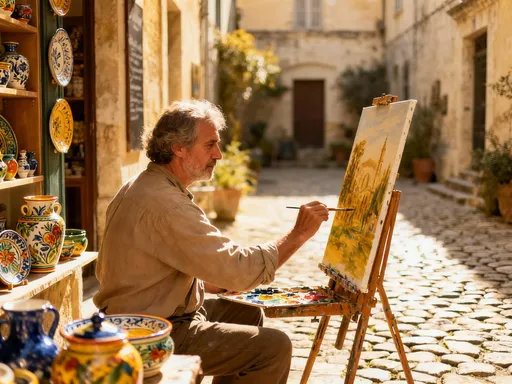
South of the Arno River lies the Oltrarno district—a neighborhood where the spirit of Florence’s craftsmanship beats strongest. While the city’s major attractions draw millions to the east bank, the west bank remains a stronghold of quiet industry, home to workshops that have operated for decades, even centuries. Here, the streets are lined with botteghe—small artisan studios—where woodworkers, leather artisans, frame makers, and mosaic artists practice their trades with a dedication that feels almost monastic.
Walking through Oltrarno is like stepping into a living archive of Florentine skill. In the early morning, shutters roll up to reveal workbenches cluttered with tools, half-finished pieces, and sketches of custom commissions. An elderly woodcarver in Borgo San Frediano might be restoring a church altar, while just around the corner, a young leatherworker uses ancestral techniques to create minimalist handbags for a global clientele. What’s remarkable is not just the skill on display, but the continuity—many of these artisans are fourth or fifth generation, trained by family members who once supplied the Medici courts.
The city has played a role in preserving this heritage. Through zoning regulations and small business grants, Florence has helped protect Oltrarno’s workshops from rising rents and commercialization. Unlike other historic cities where artisans have been pushed to the margins, Florence has made a deliberate effort to keep them at the center of urban life. This support is not just economic; it’s cultural. The city recognizes that these craftspeople are not merely vendors—they are custodians of a living tradition that defines Florence’s identity.
For visitors, exploring Oltrarno requires a different pace. There are no grand signs or ticketed entrances—just unassuming doors with hand-painted signs. The best way to experience the district is on foot, following a loose route from Piazza Santo Spirito down through Via Maggio and into the backstreets near San Miniato. Stop to watch a goldsmith solder a delicate chain, or ask a paper marbler how they achieve their hypnotic patterns. Most artisans welcome respectful curiosity, especially when it comes from genuine interest rather than tourist haste. The key is to linger, to listen, to let the rhythm of the neighborhood guide you.
Markets as Urban Living Rooms: Sant’Ambrogio and San Lorenzo
If Florence’s workshops are its cultural workshops, its markets are its living rooms—places where people gather not just to buy, but to connect. Two of the city’s most vibrant markets, Sant’Ambrogio and San Lorenzo, offer contrasting yet equally revealing experiences. While both sell food, leather goods, and souvenirs, they serve different communities and operate at different rhythms, offering visitors a chance to see how commerce functions as social glue.
Sant’Ambrogio Market, located in a quiet residential neighborhood, is where Florentines come to do their weekly shopping. Housed in a 19th-century iron-and-glass pavilion, the market feels lived-in and unpolished. Vendors greet regulars by name, exchange news about family, and offer samples with a smile. The produce is seasonal and local—plump porcini in the fall, white asparagus in spring, sun-ripened tomatoes in summer. Butchers display cuts of Chianina beef, known for its tenderness and rich flavor, while cheese stalls overflow with pecorino, stracchino, and ricotta fresca.
What sets Sant’Ambrogio apart is its authenticity. There are no plastic souvenirs or mass-produced leather bags here. Instead, you’ll find small vendors selling handmade pasta, jars of wild boar ragù, and bottles of estate-pressed olive oil. Food stands offer hot slices of schiacciata (Tuscan flatbread) or lampredotto, a traditional tripe sandwich beloved by locals. The atmosphere is warm, unhurried, and deeply communal—a far cry from the transactional energy of tourist hubs.
San Lorenzo Market, by contrast, is more theatrical. Located just steps from the Basilica of San Lorenzo, it caters heavily to visitors. The outdoor stalls overflow with leather jackets, belts, and bags, many of them imported from outside Italy and falsely labeled as “handmade in Florence.” While the market has historic roots—dating back to the 16th century—it has evolved into a commercial zone where authenticity is often compromised for volume.
That said, San Lorenzo still holds value for travelers willing to look deeper. The indoor Mercato Centrale, recently renovated, offers a more balanced experience. On the ground floor, you’ll find fresh produce and butcher stalls that still serve locals. Upstairs, the food hall features high-quality vendors serving truffle pasta, grilled meats, and artisanal gelato. By visiting early in the morning, before the tour groups arrive, it’s possible to experience a more genuine slice of market life. The lesson is simple: timing and intention matter. Go with curiosity, not checklist, and even a crowded market can reveal something true.
Leather, Gold, and Paper: Signature Crafts in City Context
Florence’s reputation for craftsmanship rests on three pillars: leather, gold, and paper. Each of these materials has deep roots in the city’s history, shaped by geography, trade, and artistic innovation. Understanding their origins—and where to find authentic examples today—adds depth to any shopping experience.
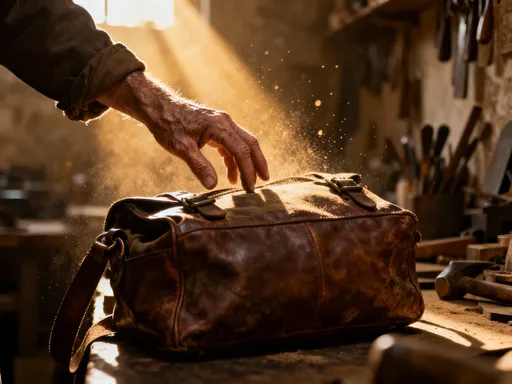
Florentine leather, renowned for its softness and durability, traces its origins to the city’s position along medieval trade routes. Tanners in the Santa Croce district once used river water and natural dyes to produce high-quality hides, a tradition that continues in select workshops today. Authentic Florentine leather is vegetable-tanned, a slower, eco-friendlier process that results in rich, evolving patinas over time. To find genuine pieces, seek out small workshops in Oltrarno or boutiques that display the “Pelle Fiorentina” certification, which verifies origin and method.
Gold jewelry is another Florentine specialty, with a legacy tied to the city’s Renaissance bankers and noble families. The Ponte Vecchio, lined with goldsmith shops since the 13th century, remains the most famous destination. While many stores cater to tourists with mass-produced designs, a few artisans still create original pieces using granulation and filigree techniques perfected centuries ago. Look for workshops that allow you to watch the making process or offer custom designs—these are more likely to be genuine artisan operations.
Marbled paper, or carta marmorizzata, is perhaps the most underrated craft. Introduced to Florence through trade with the Islamic world, it became a symbol of luxury during the Renaissance, used to bind rare books and decorate noble homes. Today, only a handful of artisans still practice the delicate art of floating pigments on water to create swirling, one-of-a-kind patterns. These papers are used for journals, stationery, and framed art. Purchasing from a certified paper marbler supports a fragile tradition at risk of disappearing.
The key to honoring these crafts is intentionality. Choose pieces made locally, ask about the process, and support artisans who prioritize quality over quantity. In doing so, you’re not just buying a souvenir—you’re helping sustain a cultural legacy.
Smart Shopping: Navigating Crowds and Finding Authenticity
Florence’s popularity brings both opportunity and challenge. With millions of visitors each year, it’s easy to get swept into the tide of mass tourism, where authenticity is diluted and choices are driven by convenience rather than care. But with thoughtful strategies, it’s possible to shop with purpose and respect.
One of the most important skills is recognizing mass-produced imports disguised as local goods. Be cautious of leather items sold at suspiciously low prices—genuine vegetable-tanned leather is expensive to produce. Look for signs of handcrafting: uneven stitching, natural imperfections in the hide, and labels that specify the workshop’s location. If a shop has dozens of identical bags in every color, it’s likely not made on-site. Instead, seek out smaller boutiques where the owner can tell you about the artisan or even introduce you to them.
Timing also makes a difference. Visit markets and workshops early in the morning, between 8 and 10 a.m., when locals are shopping and the atmosphere is calmer. Weekdays are generally quieter than weekends. Avoid midday in peak season, when tour groups flood the center. Consider exploring lesser-known neighborhoods like San Frediano or Gavinana, where tourism is lighter and interactions feel more genuine.
Engaging respectfully with artisans is equally important. Don’t treat their workshops like photo ops. Ask permission before taking pictures, listen to their stories, and allow time for conversation. Many artisans appreciate customers who show real interest, even if they don’t buy immediately. And when you do make a purchase, take it as a point of pride that you supported someone keeping a tradition alive.
Finally, consider your environmental impact. Walk or use public transit instead of taxis or rental cars. Carry a reusable bag. Choose quality over quantity—buy one well-made item that will last decades rather than five cheap ones that will wear out in months. Sustainable shopping isn’t just about the planet; it’s about preserving the integrity of the places we visit.
Why This Matters: Preserving Urban Culture Through Conscious Travel
Every purchase in Florence has the power to shape the city’s future. When travelers choose a family-run leather workshop over a chain store, they’re not just getting a better product—they’re helping preserve a way of life. Small artisans depend on thoughtful customers to survive in a world increasingly dominated by fast fashion and global retail. By supporting them, we ensure that Florence remains a living city, not a museum frozen in time.
This is about more than economics. It’s about cultural sustainability. A city thrives when its traditions are practiced, not just displayed. When a young apprentice learns to carve wood from her grandfather, when a market vendor passes his stall to his son, when a tourist takes home a piece made with care—these are the moments that keep Florence alive. They remind us that urban culture is not static; it’s sustained through daily acts of creation, exchange, and respect.
Travelers have a role in this ecosystem. We can approach shopping not as a checklist of souvenirs, but as a form of engagement. We can slow down, ask questions, and choose with intention. We can learn to recognize authenticity not by price or polish, but by story and substance. And in doing so, we become part of the city’s rhythm, not just its audience.
Florence does not need more mass-produced trinkets or overcrowded shopping streets. It needs visitors who see beyond the postcard version of the city—who are willing to cross the Arno, step into a quiet workshop, and say, “Tell me about this.” That is how we honor a place. That is how we help it endure. So the next time you’re in Florence, don’t just shop. Connect. Listen. Choose wisely. The soul of the city is waiting in the alleys just off the map.