You Won’t Believe What I Discovered in Granada’s Hidden Art Scene
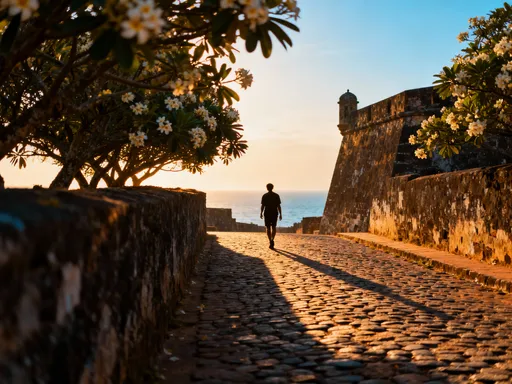
Granada, Spain, is more than just the Alhambra. Beneath its ancient streets lies a living canvas of culture, where flamenco echoes through alleyways and Moorish patterns whisper stories of centuries past. I wandered with no map, letting art guide me—from hidden courtyards to intimate tile workshops. This isn’t just tourism; it’s immersion. Granada doesn’t show you culture—it lets you feel it, breathe it, become part of it. Every cobblestone, every arched doorway, every shadowed courtyard seems to hum with memory. What I found was not a city preserved behind glass, but one pulsing with creative life, where tradition and expression walk hand in hand through sun-drenched plazas and narrow, winding lanes.
The Soul Behind the Stone: Granada’s Cultural Identity
Granada stands apart from other Spanish cities not only for its breathtaking architecture but for the depth of its cultural fusion. Unlike cities where history is layered like sediment, Granada’s past feels interwoven—Moorish, Christian, and Andalusian threads braided into a single, vibrant tapestry. This is a city where Islamic calligraphy graces palace walls alongside Renaissance frescoes, where the call to prayer may have once echoed from minarets now crowned with church bells, and where the scent of orange blossoms mingles with the sound of distant guitarra. The soul of Granada is not defined by conquest or replacement, but by coexistence—sometimes uneasy, often beautiful, always present.
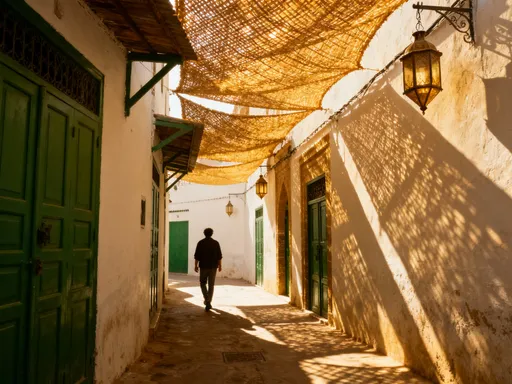
The neighborhoods of Albaicín and Realejo serve as living testaments to this enduring blend. Albaicín, a UNESCO World Heritage site, climbs the hillside opposite the Alhambra, its narrow streets twisting like vines through time. Here, whitewashed houses with intricately carved wooden doors open onto inner courtyards where fountains trickle and jasmine spills over clay pots. These homes, originally built during the Nasrid dynasty, still reflect the Islamic principle of inward beauty—privacy and serenity guarded from the outside world. Yet within many of these same homes, centuries later, Christian symbols quietly reside, evidence of the Morisco families who once lived in both worlds, preserving their heritage in subtle ways.
Realejo, once the Jewish quarter, carries its own resonance. Today, it is a hub of creativity, where art galleries nestle beside family-run tapas bars and small theaters host nightly performances. The streets here are wider, more open, reflecting a different urban philosophy, yet still marked by the same attention to detail—tile accents, wrought-iron grilles, and archways that echo across centuries. It is in Realejo that one begins to understand how Granada’s art is not confined to museums or monuments, but lives in the rhythm of daily life: in the baker shaping dough at dawn, in the old man reading poetry on a park bench, in the children laughing as they chase each other through the Plaza Nueva.
This cultural identity is not static. It breathes, evolves, and invites participation. Visitors often come for the Alhambra, but they stay for the feeling—that they have stepped into a place where history is not explained, but experienced. The city does not perform its heritage; it embodies it. And this embodiment is what makes Granada’s art scene so deeply authentic, so profoundly moving. It is not about reenactment or recreation, but continuity—the unbroken thread of expression that has survived centuries of change.
Alhambra: More Than a Monument, a Masterpiece of Storytelling
The Alhambra is often described in superlatives—magnificent, awe-inspiring, unparalleled—and rightly so. Yet to see it only as a monument is to miss its true essence. The Nasrid Palaces are not merely beautiful; they are philosophical texts carved in stone, water, and light. Every element—from the delicate arabesques on the walls to the reflective pools in the courtyards—serves a purpose beyond decoration. They are expressions of Islamic cosmology, reflections on the divine, and meditations on transience and eternity. To walk through the Alhambra is not just to tour a palace, but to engage in a silent dialogue with the minds that conceived it.
The Court of the Lions, perhaps the most iconic space, is often crowded with visitors snapping photos, but few pause to consider its deeper meaning. The twelve lions supporting the central fountain are not merely decorative; they symbolize strength and protection, while the number twelve echoes lunar cycles and the zodiac, linking earthly time to celestial order. The fountain itself, once a marvel of hydraulic engineering, represents the Islamic concept of paradise as a garden fed by flowing water. Even the acoustics are intentional—the soft echo of footsteps and whispers mimics the murmur of a secluded sanctuary, reinforcing the sense of peace and introspection.
Yet beyond the well-trodden paths lies a quieter, more contemplative Alhambra. The Partal Gardens, often overlooked, offer a serene retreat where the reflection of the palace shimmers in still water, framed by cypress trees and blooming roses. Here, the symmetry of design blends seamlessly with nature, creating a space that feels both ordered and alive. Nearby, the ruins of the Hammam, the royal bathhouse, speak of daily rituals steeped in purification and mindfulness. Though only fragments remain, the arches and domed ceilings hint at a space designed for sensory transformation—where steam, scent, and sound once guided visitors toward spiritual clarity.
What makes the Alhambra enduring is not its grandeur alone, but its intimacy. Despite its scale, it was built for human experience—small rooms, low doorways, shaded corridors—all designed to draw the visitor inward, both physically and mentally. The inscriptions that cover the walls, written in elegant Kufic script, are not declarations of power, but verses from the Quran and poetry celebrating beauty, humility, and the fleeting nature of life. One reads: “There is no victor but God,” a reminder that even the most powerful rulers are transient. This humility, embedded in stone, is what gives the Alhambra its lasting power. It does not impress through dominance, but through depth.
Flamenco at Its Rawest: The Heartbeat of Sacromonte
If the Alhambra is the mind of Granada’s art, then Sacromonte is its beating heart. Nestled in the hills behind the Albaicín, this neighborhood is carved into the mountainside, its homes—cave dwellings known as *cuevas*—hollowed from the rock centuries ago. These caves were once shelters for the Roma (Gypsy) community, who brought with them a musical tradition that would evolve into what the world now knows as flamenco. Here, the music is not performed for tourists; it is lived, felt, and passed down through generations like a sacred inheritance.
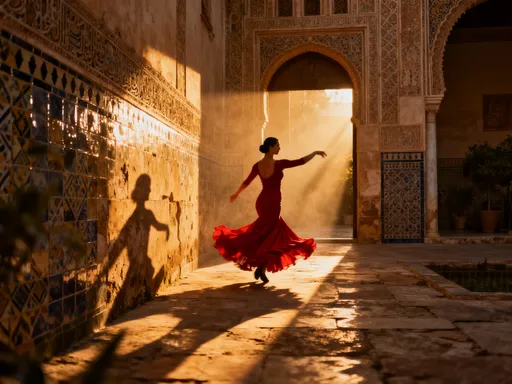
An authentic flamenco *juerga*—an informal gathering of singers, dancers, and musicians—is unlike any staged show. There is no spotlight, no program, no encore. Instead, there is a circle of people, often family and close friends, gathered in a dimly lit cave. A guitarist begins with a single chord, deep and resonant. A voice rises—raw, unfiltered, trembling with emotion. The lyrics speak of love, loss, longing, and resilience. The dancer, usually a woman in a long, ruffled dress, begins to move—not for applause, but as an act of expression. Her feet strike the wooden floor in complex rhythms, her arms flowing like water, her face a mask of intensity. This is not entertainment; it is testimony.
The power of flamenco lies in its authenticity. It does not seek to please; it seeks to communicate. The *cante jondo*, or “deep song,” is said to come from the soul, born of suffering and survival. To witness it is to be invited into a moment of profound vulnerability. Visitors are welcome, but only if they come with respect. The best experiences are found in community-run *peñas* or family-owned *tablaos*, where the focus is on tradition rather than commercial appeal. These spaces often require reservations and discourage loud behavior or photography during performances, preserving the sanctity of the art.
Sacromonte today remains a guardian of this legacy. While some caves have been converted into tourist attractions, many families continue to live here, maintaining their cultural practices with quiet pride. Children learn to sing before they learn to read; elders pass down lyrics like heirlooms. To visit Sacromonte is not to observe a relic, but to encounter a living tradition—one that refuses to be packaged or diluted. It reminds us that art, at its best, is not something we consume, but something we witness with reverence.
Zellige and Azulejos: The Living Craft of Tilework
One of the most striking visual elements of Granada’s art is its tilework. From the grand facades of historic buildings to the humblest neighborhood fountain, ceramic tiles—known as *azulejos*—adorn surfaces with color, pattern, and meaning. Equally present is *zellige*, the North African tradition of hand-cut, geometric mosaic tilework, which flourished under Moorish rule. Unlike mass-produced tiles, these are crafted one piece at a time, using techniques passed down through generations. To see them is to see mathematics transformed into beauty, spirituality expressed through symmetry.
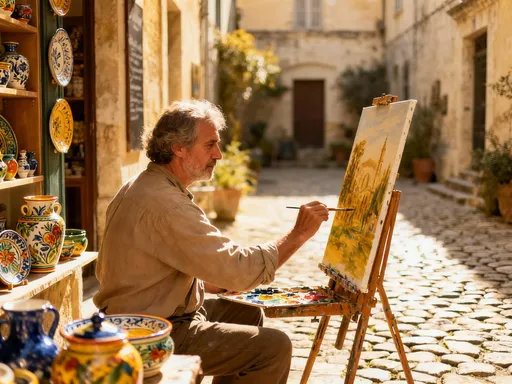
In small artisan studios tucked into the alleys of Albaicín and Realejo, the process remains largely unchanged. Artisans begin with raw clay, shaping it into square or hexagonal forms, then firing it in wood-burning kilns. Once cooled, the tiles are hand-painted with mineral-based pigments—cobalt for blue, copper for green, manganese for black. The designs are never random; they follow strict geometric rules, often based on repeating stars, polygons, or interlacing lines. These patterns are not merely decorative; they reflect Islamic beliefs about the infinite nature of God, the order of the universe, and the imperfection of the human hand. A slight variation in a line is not a flaw, but a reminder that only the divine is perfect.
Visitors can observe this craft in quiet workshops where the sound of brushes on clay blends with the scent of wet pigment. Some studios offer short workshops, allowing guests to try their hand at painting a small tile. These experiences are not about mastery, but connection—about understanding the patience, precision, and intention behind each piece. The artisans, often third- or fourth-generation craftsmen, speak with quiet pride about their work, not as artists seeking fame, but as custodians of a tradition.
The significance of tilework in Granada extends beyond aesthetics. It is a language—a way of marking sacred spaces, honoring ancestors, and beautifying the everyday. A simple fountain in a hidden courtyard, covered in blue and white tiles, becomes a place of pause, reflection, and gratitude. A church façade adorned with floral mosaics speaks of renewal and hope. Even modern buildings incorporate traditional patterns, ensuring that the craft does not disappear, but evolves. In a world of digital reproduction, Granada’s tilemakers remind us that beauty born of human hands carries a soul that machines cannot replicate.
Street Art with a Story: Modern Expressions in Ancient Walls
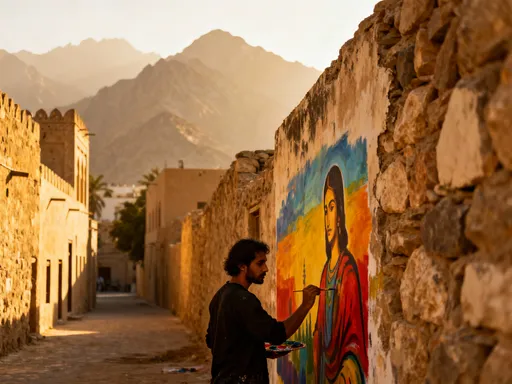
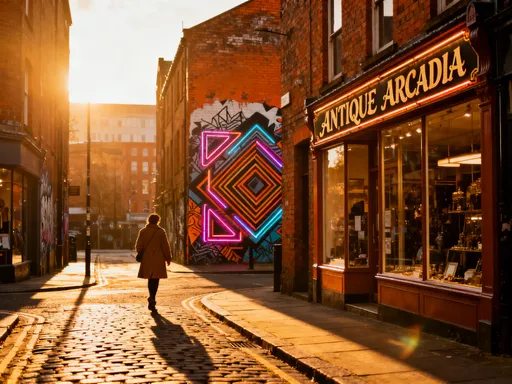
While Granada honors its past, it does not live in it. A closer look reveals a thriving contemporary art scene, particularly in the form of street murals. In Realejo and near the university district, walls once blank or crumbling now serve as canvases for local and international artists. These are not random tags or chaotic graffiti, but carefully composed works that engage with history, identity, and social memory. A portrait of a veiled woman might be framed by Islamic geometric patterns; a mural of migrating birds could symbolize the movement of people across borders; a child reading a book in Arabic and Spanish might represent cultural continuity.
What sets Granada’s street art apart is its dialogue with the city’s heritage. Rather than defacing ancient walls, these murals often complement them, adding layers of meaning without erasing the past. In some cases, artists use optical illusions to integrate their work with existing architecture—a painted arch appears to extend a real one, or a cascade of flowers seems to spill from a stone window. This respect for context ensures that the art enhances, rather than competes with, the city’s historic fabric.
Many of these works are temporary, subject to weather and time, much like the traditions they reference. Yet their impermanence is part of their message—art, like life, is fleeting. Some murals are commissioned by the city as part of cultural festivals, while others appear spontaneously, born of personal expression. What unites them is a commitment to storytelling. They do not shout; they whisper. They invite passersby to stop, look, and think.
For visitors, these murals offer a bridge between past and present. They show that Granada’s artistic spirit is not confined to the 14th century, but continues to evolve. They also reflect the city’s openness—a place where diverse voices can find space to speak. In a world where heritage is often protected to the point of stagnation, Granada demonstrates that preservation and innovation can coexist. The old walls do not silence the new art; they amplify it.
Cultural Immersion: How to Experience Art Like a Local
To truly understand Granada’s art, one must move beyond sightseeing. The city rewards slow, mindful travel—moments of stillness, conversation, and observation. Begin by attending a *peña flamenco*, a small cultural association where locals gather to share music. These intimate venues, often located in basements or courtyards, offer a more authentic experience than large tourist tablaos. Reservations may be required, and photography is often discouraged during performances, but the emotional payoff is immeasurable.
Guided tours led by artists or historians can also deepen understanding. Look for walking tours focused on Islamic art, tilemaking, or the history of the Roma people. Some include visits to working studios, where artisans demonstrate their craft and answer questions. These interactions transform passive observation into active learning. Similarly, visiting during cultural festivals—such as the Bienal de Flamenco, held every two years—offers a chance to see the art form at its most dynamic, with performances ranging from traditional to experimental.
Equally important is the practice of simply being present. Sit in a plaza and listen. Watch how light changes on a tiled wall throughout the day. Chat with a shopkeeper about the meaning behind a pattern. Buy a handmade tile not as a souvenir, but as a gesture of support. These small acts create connection. They shift the traveler from observer to participant.
Avoid the temptation to rush. Granada does not reveal itself in a day. Its art is not found in checklists, but in moments—a shared silence after a flamenco song, the cool touch of a stone wall in summer heat, the scent of wet clay in a workshop. To experience it like a local is to slow down, to listen, and to let the city speak in its own time.
Why Granada’s Art Endures: A Legacy in Motion
Granada’s art endures not because it is preserved behind glass, but because it is lived. It is in the hands of a tilemaker shaping clay, the voice of a singer breaking into song at midnight, the child tracing a geometric pattern in the dust. This is not a city of relics, but of rhythms—cultural beats that have survived centuries of change because they remain rooted in community, meaning, and emotion.
What makes Granada unique is its refusal to separate art from life. Music is not confined to concert halls; it spills into the streets. Craft is not reserved for museums; it adorns homes and fountains. Spirituality is not locked in temples; it flows through poetry, design, and daily ritual. This integration ensures that culture is not performed, but practiced—that it is not something to be seen, but something to be felt.
In a world increasingly dominated by digital replication and mass production, Granada offers a powerful alternative: art as a human act, imperfect, intentional, and deeply personal. It reminds us that beauty is not only in the finished piece, but in the process—the hours of carving, the years of practice, the generations of memory.
To visit Granada is to be invited into this legacy. It does not demand admiration, but attention. It asks only that we listen—to the silence between notes, to the stories in the stones, to the quiet pulse of a city that has turned survival into song. In doing so, we do not merely witness art. We become part of it.