You Won’t Believe These Cityscapes — Punta del Este Through My Lens
Punta del Este isn’t just beaches and yachts — it’s a visual story waiting to be captured. I went chasing light, angles, and urban textures, and found a cityscape that blends glamour with raw coastal beauty. From sunrise over the harbor to neon-lit streets at night, every frame felt alive. If you're into photography that goes beyond postcards, this place will rewrite your definition of urban coastal charm. Trust me — it’s more than a resort town. It’s a living canvas where architecture dances with nature, where quiet alleyways hum with stories, and where the Atlantic wind shapes both the landscape and the soul of the city. This is a destination that rewards the observant eye.
First Impressions: Where Glamour Meets the Atlantic
Arriving in Punta del Este, one is immediately struck by the contrast between sleek modernity and untamed nature. Towering glass condominiums rise like sentinels along the coastline, their reflective surfaces mirroring the shifting hues of the sky, while just beyond, the Atlantic crashes against jagged rocks with timeless force. This duality defines the city’s visual character — a cosmopolitan beach destination where luxury living coexists with raw coastal energy. The urban layout follows the natural curve of the peninsula, allowing for sweeping vistas that blend built environments with ocean panoramas.
From a photographer’s perspective, the city unfolds as a layered composition. Wide boulevards lead the eye toward the water, while narrow side streets reveal pockets of local life — a fisherman mending nets, a vendor arranging sun hats, a café table set beneath a striped awning. The architectural styles vary dramatically: minimalist high-rises stand beside Mediterranean-style villas with terracotta roofs, and contemporary art galleries nestle between traditional seaside homes. This eclectic mix creates a dynamic visual rhythm, offering endless opportunities for framing and contrast.
What makes Punta del Este particularly compelling for cityscape photography is its balance of polish and authenticity. Unlike some resort towns that feel artificially curated, this city retains a pulse of real life. The streets are not just for show — they are lived in, worked on, and loved. This authenticity translates into richer imagery. A photograph of a gleaming skyscraper gains depth when juxtaposed with the weathered face of a local artisan or the flutter of laundry strung between old buildings. The city invites you to look beyond the surface, to find stories in the spaces between luxury and labor, between tourism and tradition.
For those seeking compelling urban narratives, Punta del Este offers a rare convergence: the sophistication of a global destination with the soul of a coastal community. It is a place where the skyline tells a story not just of wealth, but of resilience, adaptation, and harmony with the sea. Whether shooting from a distance or at street level, the photographer is constantly presented with moments that capture both grandeur and intimacy.
Golden Hour at the Peninsula: Light, Shadows, and Iconic Silhouettes
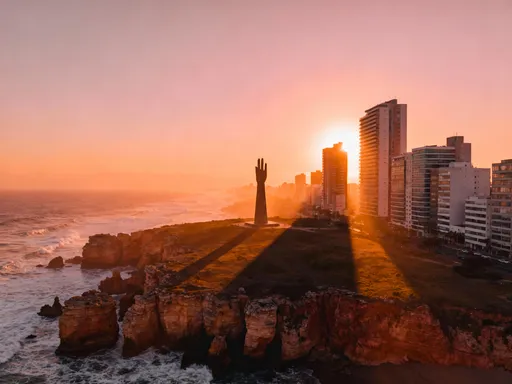
The peninsula of Punta del Este is where the city’s most iconic imagery is born. At sunrise and sunset, the rocky shoreline becomes a stage for dramatic interplay between light and shadow. The famous Los Dedos hand sculpture, emerging from the sand at Playa Brava, takes on a mystical quality during golden hour — its fingers glowing in warm hues, casting long, surreal shadows across the beach. This is not just a photo opportunity; it’s a moment of visual poetry, where art, nature, and time converge.
Photographers who time their visits carefully are rewarded with extraordinary conditions. Just before sunrise, the sky transitions from deep indigo to soft peach, illuminating the horizon with a gentle gradient. As the sun rises, it grazes the surface of the water, creating a luminous path that leads directly to the sculpture. Using a polarizing filter can enhance the contrast between the golden sand and the cool blue of the ocean. A wide-angle lens captures the vastness of the scene, while a telephoto lens isolates the hand against the sun, turning it into a powerful silhouette.
Sunset offers a different kind of magic. The western-facing cliffs catch the last rays of daylight, their textures amplified by the low-angle light. The city skyline across the bay begins to twinkle, and the warm tones of the stone and concrete structures contrast beautifully with the cooling shadows. This is the ideal time to experiment with exposure settings — slightly underexposing the sky can deepen the colors, while a well-timed long exposure can smooth the waves into a glassy surface, reflecting the fiery sky.
Beyond technique, there is an emotional resonance to shooting at golden hour here. The quiet of early morning, with only the sound of waves and distant seagulls, fosters a meditative state conducive to creative focus. The fleeting nature of the light — lasting only 20 to 30 minutes — adds urgency and intentionality to every shot. It teaches patience and presence, reminding the photographer that the best images are not just captured, but earned through timing, observation, and respect for the environment.
Conrad Hill: The Overlook That Changes Everything
Rising above the city, Conrad Hill offers one of the most comprehensive views of Punta del Este’s urban and natural landscape. From this elevated vantage point, the entire peninsula unfolds like a meticulously composed photograph. To the east, the calm waters of Playa Mansa stretch toward the horizon; to the west, the wilder waves of Playa Brava crash against the rocks. Below, the harbor twinkles with yachts and fishing boats, while the city’s grid of streets and buildings fans out in an orderly yet organic pattern.
This is the definitive location for wide-angle cityscape photography. A 16-35mm lens captures the full sweep of the coastline, emphasizing the contrast between the structured urban environment and the untamed ocean. The curvature of the land, the alignment of the high-rises, and the convergence of sea and sky create natural leading lines that draw the viewer’s eye deep into the frame. For those interested in architectural photography, the hill provides a bird’s-eye perspective on design patterns — the repetition of balconies, the rhythm of rooftops, the interplay of vertical and horizontal forms.
The best time to shoot from Conrad Hill is during the late afternoon, when the sun begins to lower but still bathes the city in even light. Clouds drifting across the sky add texture and drama, especially when backlit. A polarizing filter helps reduce glare on glass surfaces, while a tripod ensures sharpness in longer exposures. Photographers can also experiment with time-lapse sequences, capturing the movement of clouds over the course of an hour, transforming the static cityscape into a dynamic narrative.
Accessibility is relatively straightforward — a paved road leads to the top, and there are several designated viewpoints with safety railings. While the site is popular, it rarely feels overcrowded, especially outside peak tourist hours. Early evening brings a different energy, as the city begins to illuminate. Streetlights flicker on, windows glow, and the harbor lights reflect on the water, creating a mosaic of points and streaks of light. This transition from day to night offers a unique opportunity to document the city’s transformation in a single session.
La Mano Beach to Playa Brava: Urban Energy Meets Wild Coast
Moving from elevated perspectives to ground level, the stretch from La Mano Beach to Playa Brava reveals the human heartbeat of Punta del Este. Here, the city’s polished exterior gives way to vibrant street life — surfers carrying boards across the sand, children building castles, vendors selling mate and empanadas from rolling carts. This is where urban energy meets the wild Atlantic, and where candid photography finds its richest material.
The atmosphere is both relaxed and charged with activity. Locals and tourists mingle freely, drawn to the powerful waves and the iconic sculpture. The beach is not just a place for leisure; it’s a social space, a cultural crossroads. Photographers can capture moments of connection — a couple laughing as waves splash their feet, a dog chasing a ball, a group of friends sharing a bottle of wine as the sun sets. These are the unscripted interactions that give a cityscape its soul.
Shooting in this environment requires sensitivity and discretion. The key is to blend in, to become part of the scene rather than an intruder. Using a 35mm or 50mm prime lens allows for natural framing without appearing overly intrusive. Shooting from the hip or at waist level can yield spontaneous compositions, while waiting for the right moment — a gesture, a glance, a burst of movement — ensures authenticity. It’s important to respect personal space and, when appropriate, to ask for permission before photographing individuals up close.
The textures of this zone are equally compelling. The roughness of the rocks, the smoothness of wet sand, the grain of wooden boardwalks — all contribute to a tactile visual experience. Reflections in puddles, ripples in the tide, and the way light filters through beach umbrellas add layers of complexity. Even the graffiti on concrete barriers or the peeling paint on snack kiosks can become compelling subjects when framed with intention. This is photography that embraces imperfection, finding beauty in the worn, the weathered, and the real.
Art and Architecture: Framing the City’s Personality
Punta del Este’s identity is expressed not just through its natural beauty, but through its design language. The city is a living gallery of modern architecture and public art, where form and function coexist with creative expression. From sleek, angular villas perched on cliffs to colorful murals adorning side streets, the visual landscape is rich with photographic opportunities.
Contemporary homes dominate the upscale neighborhoods, their clean lines and expansive glass walls reflecting the influence of international design trends. Many feature infinity pools that seem to merge with the ocean, creating striking compositional elements. Photographers can use symmetry and reflection to enhance these images — capturing the perfect alignment of a pool’s edge with the horizon, or the mirror-like surface of water doubling the structure above. The use of negative space — such as a single house framed against a vast sky — can evoke a sense of solitude and elegance.
Public art installations are scattered throughout the city, serving as both landmarks and compositional anchors. In addition to Los Dedos, visitors will encounter sculptures like the giant broken heart by Fernando Botero and abstract metal forms along the coastal walkway. These works invite interaction, both physical and visual. Framing a sculpture with the ocean in the background, or capturing a child climbing on it, adds narrative depth. The contrast between organic forms and geometric surroundings creates visual tension that is inherently photographic.
Color plays a significant role in the city’s aesthetic. Brightly painted doors, turquoise awnings, and flower-filled balconies punctuate the more neutral tones of concrete and glass. These bursts of hue can be used as focal points in an image, drawing the eye and adding vibrancy. Leading lines — whether from a row of palm trees, a staircase, or a series of arches — guide the viewer through the composition, creating a sense of movement and direction. The city, in this way, teaches photographers to see structure not just as background, but as an active participant in storytelling.
Nightscapes: When the City Turns Into Light
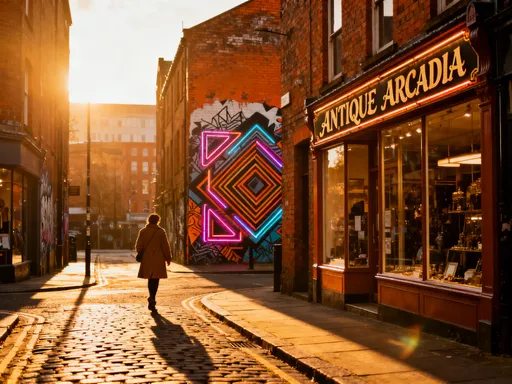
As daylight fades, Punta del Este undergoes a transformation. The city becomes a constellation of artificial light — streetlamps, neon signs, illuminated windows, and the steady glow of the harbor. Night photography here is not an afterthought; it is a central chapter in the city’s visual narrative. The interplay of light and darkness reveals a different kind of beauty, one defined by contrast, reflection, and movement.
The port area is a prime location for long exposures. Yachts with deck lights create star-like points in the water, while passing cars leave streaks of red and white along the coastal roads. Using a tripod and a shutter speed of 10 to 30 seconds can turn these moving lights into smooth trails, adding dynamism to static cityscapes. A small aperture (f/8 to f/16) ensures maximum depth of field, keeping both foreground and background elements in focus. The wet pavement after a light rain enhances the effect, doubling every light source in a shimmering reflection.
Avenida Gorlero, the city’s main commercial strip, comes alive at night with neon signs and bustling pedestrian traffic. Capturing the energy of this area requires a balance between sharpness and motion blur. A slightly slower shutter speed (1/15 to 1/30 second) can blur the movement of people, conveying the flow of urban life without losing all detail. Shooting from an upper floor or balcony provides a wider perspective, allowing the photographer to capture the rhythm of the street below.
Gear considerations are crucial for night photography. A sturdy tripod is essential, as is a remote shutter release to prevent camera shake. Extra batteries are recommended, as cold temperatures and long exposures drain power quickly. While the city is generally safe, it’s wise to remain aware of surroundings, especially in less crowded areas. Sticking to well-lit zones and shooting with a companion when possible ensures both safety and peace of mind.
Beyond the Postcard: Finding Authentic Moments in a Tourist Hub
Every photographer faces the challenge of capturing something original in a place that has been widely photographed. Punta del Este, with its iconic landmarks and polished image, could easily be reduced to a collection of predictable postcard shots. Yet, its true value lies in the moments that exist beyond the brochure — the quiet alley where a cat naps in a sunbeam, the fish market at dawn, the elderly couple walking hand in hand along the promenade.
Finding these authentic moments requires patience and intention. It means arriving early, staying late, and wandering without a fixed destination. It means talking to locals, learning their routines, and understanding the rhythm of daily life. A street vendor who sells sunglasses may become a recurring subject, his weathered face telling a story of years by the sea. A laundromat with clothes flapping in the wind might become an unexpected study in color and movement.
It also means embracing imperfection. A slightly blurred shot, a crooked horizon, a moment of unexpected rain — these are not failures, but opportunities. They remind us that photography is not about technical perfection, but about connection. The most powerful images are often those that capture a feeling, a mood, a fleeting instant that cannot be recreated.
For those willing to look deeper, Punta del Este offers more than luxury and leisure — it offers depth. It challenges the photographer to move beyond the obvious, to seek out the quiet corners, the unnoticed details, the human stories that give a city its soul. In doing so, one discovers that the most compelling cityscapes are not just about what we see, but about how we see it.
In the end, Punta del Este is more than a destination — it is a state of mind. It is a place where the boundaries between urban and natural, between tourist and local, between art and life, blur into something richer and more meaningful. Its cityscape is not static; it shifts with the light, evolves with the tides, and pulses with the energy of those who live and visit. For photographers, it offers a rare gift: the chance to capture beauty with substance, to tell stories that resonate beyond the surface. So pick up your camera, step off the beaten path, and let the city reveal itself — not as a postcard, but as a living, breathing work of art. Explore with curiosity. Shoot with intention. And let Punta del Este rewrite your definition of coastal urban beauty.