Breathtaking Views and Slow Sunsets: Bodrum Through My Eyes
Have you ever stood somewhere and felt time just… stop? That’s Bodrum for me. Trading rush for rhythm, I wandered its sun-bleached streets, climbed quiet hills, and sipped tea where the Aegean meets the sky. This isn’t a checklist trip—it’s about lingering at viewpoints only locals knew, breathing in moments, not milestones. Slow travel here doesn’t just change how you see Bodrum—it changes how you see everything. In a world that celebrates speed, this coastal gem offers a rare invitation: to pause, to listen, and to rediscover the quiet magic of being present.
The Art of Slowing Down in a Fast World
In an age where itineraries are packed, notifications never cease, and travel is often reduced to photo ops and timed entries, the idea of moving slowly can feel revolutionary. Yet in Bodrum, slowing down isn’t a luxury—it’s a natural response to the place itself. The air carries a different weight here, one that resists urgency. The rhythm of daily life unfolds without fanfare: fishermen mending nets at dawn, shopkeepers opening shutters with unhurried precision, neighbors sharing tea on low wooden stools. These moments aren’t staged for tourists; they are lived, repeated, and deeply rooted in the culture of presence.
Slow travel, at its core, is about intention. It means choosing depth over distance, connection over collection. It’s the difference between ticking off a list of landmarks and allowing yourself to get lost in a side street where the scent of grilled fish drifts from a family-run meze bar. In Bodrum, this approach transforms the experience from observation to participation. A morning coffee at a seaside kiosk becomes more than a caffeine stop—it turns into a conversation with the owner, a lesson in Turkish phrases, and a front-row seat to the waking rhythm of the harbor.
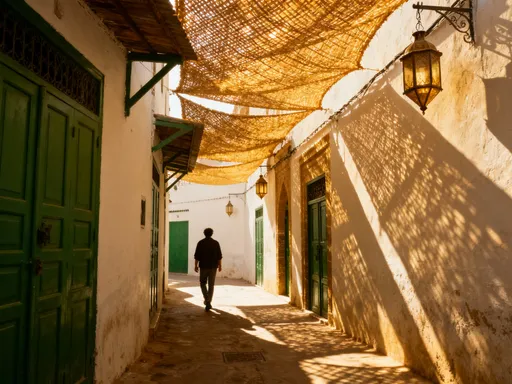
Many travelers arrive with maps full of pins, determined to see everything in 48 hours. But the truth is, rushing through Bodrum’s cobbled lanes and coastal paths only yields surface impressions. The real essence of the place—its warmth, its quiet resilience, its understated beauty—reveals itself only to those who linger. Slowing down is not passive; it’s an active choice to engage more fully with the moment, to notice the way light dances on whitewashed walls at 4 p.m., or how children laugh as they chase each other through alleyways shaded by bougainvillea.
This shift in pace doesn’t happen overnight. It requires a conscious release of the need to optimize every minute. But in Bodrum, the environment supports this transformation. There are no grand demands on your time. No must-see attractions with long lines or timed entries. Instead, there’s an invitation: to walk without destination, to sit without agenda, to simply be. And in that stillness, a deeper kind of discovery begins.
Why Bodrum Invites a Slower Pace
Bodrum’s geography and culture form a perfect harmony for mindful travel. Nestled on a peninsula where the Aegean and Mediterranean seas nearly meet, the region is defined by gentle coastlines, rolling hills, and a climate that encourages outdoor living. The landscape itself resists haste. Narrow streets wind through hillsides, not built for speed but for strolling. Houses climb the slopes in clusters of white and terracotta, connected by stone steps that invite pauses—and views—at every turn.
The town’s history adds another layer to its contemplative atmosphere. Once the site of the ancient city of Halicarnassus, home to one of the Seven Wonders of the Ancient World, Bodrum carries its past lightly. Ruins are not fenced off or commercialized; they’re woven into daily life. A column from an old temple might support a café’s pergola, or a section of ancient wall might form the boundary of a private garden. This seamless blend of old and new fosters a sense of continuity, a reminder that life here has always moved at its own pace.
The local lifestyle further reinforces this rhythm. Fishing remains a central part of coastal communities, with boats returning at dawn bearing the night’s catch. Markets open early but never rush; vendors take time to wrap herbs in paper, to offer samples of olives, to chat about the weather. Evenings are reserved for slow walks along the waterfront, where families gather, children play, and the horizon blazes with color as the sun dips into the sea. There’s no pressure to perform, to consume, or to impress. Life unfolds in real time.
Bodrum’s compact size also makes slow exploration practical. The peninsula is small enough to navigate on foot or by bicycle, yet varied enough to offer constant discovery. One day might begin in the bustling marina, continue through the quiet olive groves of Gümüşlük, and end with a sunset viewed from a secluded cove. This diversity within proximity eliminates the need for long transfers or rigid schedules, allowing travelers to follow curiosity rather than timetables.
Moreover, the Mediterranean climate plays a role in shaping the pace. Warm days encourage siestas; cool evenings invite lingering over meals. The sun rises early and sets in a spectacle of gold and rose, marking time not by clocks but by light. In this environment, the idea of rushing feels not just unnecessary, but out of place. Bodrum doesn’t demand your attention—it offers it, gently, to those who are willing to receive it.
Finding Stillness at Bodrum’s Hidden Viewpoints
While the castle and marina draw the most visitors, the true magic of Bodrum often lies beyond the postcard spots. There are places—known more to locals than to guidebooks—where the sea stretches endlessly, the air is scented with wild herbs, and silence is not interrupted by crowds. These hidden viewpoints are not destinations you can reach by tour bus. They require effort, curiosity, and a willingness to wander. But the reward is a kind of stillness that feels rare in modern travel.
One such place is a hillside near Yalıkavak, where a narrow dirt path leads to a clearing overlooking the northern coast. From here, the water shimmers in shades of turquoise and deep blue, broken only by the occasional sail of a passing boat. In the early morning, mist rises like breath from the surface of the sea. By late afternoon, the light turns golden, casting long shadows across the rocks. There are no benches, no signs, no vendors—just space and sky. Sitting here, it’s easy to forget time altogether.
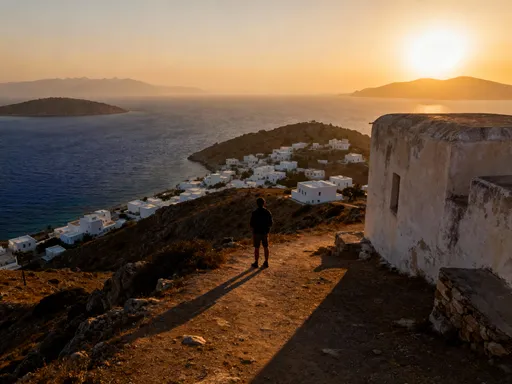
Another quiet vantage point lies above Gümüşlük, a fishing village at the tip of the Bodrum peninsula. A short climb from the old stone bridge leads to a rocky outcrop where locals sometimes gather at sunset. The view encompasses the entire bay, with its small harbor, traditional wooden boats, and the silhouette of an ancient watchtower in the distance. The scent of thyme and oregano fills the air, carried on the breeze from the surrounding hills. On weekends, you might share the space with a few families or photographers, but on weekdays, it’s often yours alone.
These places are best reached on foot or by bicycle, reinforcing the principles of slow travel. Walking allows you to notice details—a patch of wildflowers clinging to a wall, the sound of a goat bell in the distance, the texture of sun-warmed stone under your hand. It also increases the likelihood of unexpected encounters: a farmer offering a fig from his tree, a child waving from a doorway, a stray cat sunning itself on a windowsill. These small moments, fleeting and unscripted, are the soul of authentic travel.
Reaching these viewpoints requires no special equipment or permits, only a map, comfortable shoes, and a spirit of exploration. Some are marked on local hiking trails; others are shared through word of mouth. The act of finding them—navigating turns, asking for directions in broken Turkish, following goat paths uphill—becomes part of the experience. And when you finally arrive, breathless and sun-kissed, the view feels earned, not given.
Sunrise from Bodrum Castle: A Moment Worth the Early Rise
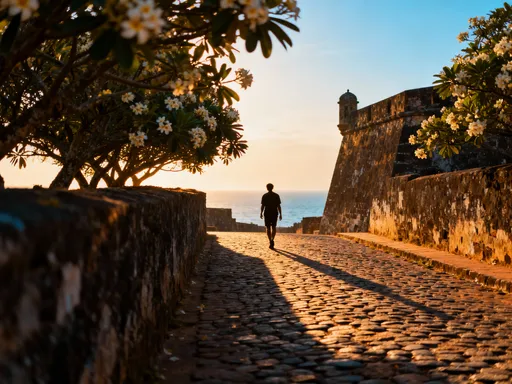
One morning, long before the shops opened or the boats set out, I made my way up the stone path to Bodrum Castle. The air was cool, almost crisp, carrying the faint saltiness of the sea. The fortress, usually bustling with visitors by mid-morning, stood in quiet solitude. The only sounds were the distant lap of waves and the occasional call of a seabird. I found a spot on the eastern rampart, facing the sea, and waited.
As the sky began to lighten, the darkness softened into shades of indigo and gray. The silhouette of the castle walls stood sharp against the horizon. Then, slowly, a thin line of gold appeared where sea met sky. It widened, spilled upward, painting the clouds in hues of apricot and rose. The water, once flat and dark, began to shimmer, first in streaks, then in waves of light. By the time the full sun emerged, the entire coastline was glowing—white houses catching the light, palm trees outlined in gold, the marina waking to a new day.
Watching sunrise from the castle is more than a visual experience; it’s a reset. Arriving early means avoiding the crowds, yes, but it also means starting the day with intention. There’s a clarity that comes with witnessing dawn in silence, with no distractions, no demands. It’s a reminder that each day is a fresh beginning, not just a continuation of yesterday’s rush.
The castle itself adds to the moment’s depth. Built by the Knights of St. John in the 15th century, it has stood guard over this coast for centuries. From its walls, you can see the layers of history—the ancient theater carved into the hillside, the modern yachts in the harbor, the distant islands that have drawn sailors for millennia. Standing there at sunrise, you feel connected to all of it—not as a distant observer, but as a temporary keeper of the view.
This kind of experience is nearly impossible within a packed itinerary. It requires sacrificing sleep, yes, but more importantly, it requires a willingness to prioritize presence over productivity. In a world that measures value by output, choosing to do nothing but watch the sun rise can feel radical. Yet in Bodrum, it feels natural. The place rewards those who make space for stillness, who understand that some of the most powerful moments in travel are the ones that cannot be rushed.
The Village Pulse: Slow Travel Beyond the Coast
Beyond the beaches and bays, inland villages offer another dimension of Bodrum’s rhythm. Places like Cumalı, Gümbet, and Yakaköy move at a pace that feels generations removed from the summer crowds. Here, life is shaped by agriculture, craftsmanship, and community. Roosters crow at dawn, goats graze on rocky slopes, and the scent of wood smoke lingers in the evening air. These villages don’t exist for tourism—they welcome it, but on their own terms.
In Cumalı, a small farming village nestled in the hills, I spent an afternoon at a family-run café shaded by mulberry trees. The owner, a woman in her sixties, served fresh yogurt with honey from her own bees and warm bread baked that morning. There was no menu, no rush. We communicated in gestures and a few shared words, but the hospitality needed no translation. Later, I wandered through the village square, where an old man repaired a stone wall with quiet precision, and children played with a handmade wooden cart.
Gümbet, though closer to the main road, retains a village feel outside the resort zones. Its weekly market draws locals from surrounding areas, offering everything from handmade ceramics to fresh goat cheese wrapped in fig leaves. Walking through the stalls, I noticed how transactions were accompanied by conversation—how a purchase of tomatoes might lead to a recipe suggestion, or a compliment on a scarf might spark a story about its origin. This is commerce rooted in relationship, not just exchange.
Reaching these villages is part of the slow travel experience. Local minibuses, known as dolmuş, run on flexible schedules and accept no reservations. You wait at the roadside, wave one down, and climb in alongside farmers, shopkeepers, and retirees. The rides are bumpy, the routes indirect, but they offer a genuine connection to daily life. There’s no curated narrative—just the real, unfiltered flow of the region’s pulse.
Visiting these places without an agenda allows for the kind of serendipity that defines meaningful travel. You don’t go to see a specific attraction; you go to be present. And in that openness, moments arise: a shared meal, an invitation to a garden, a spontaneous dance at a village wedding. These are not experiences you can plan, but they are the ones you remember.
Practical Ways to Embrace Slow Travel in Bodrum
Slowing down in Bodrum doesn’t require a complete lifestyle overhaul—it begins with small, intentional choices. One of the most effective is selecting accommodations that support the rhythm of mindful travel. Opt for a guesthouse with a terrace facing the sea, where you can drink tea at sunrise or watch the stars appear one by one. Stay in family-run pensions rather than large resorts; the personal touch often leads to local tips and genuine connections.
Another key practice is limiting daily activities. Instead of planning three excursions per day, choose one—perhaps a walk to a hidden beach, a visit to a village market, or an hour sketching at a quiet harbor. Leave the rest of the time open. This creates space for spontaneity, for lingering over coffee, for following a path just because it looks interesting. The goal is not to see everything, but to experience what you do see more deeply.
Learning a few basic Turkish phrases can also deepen your experience. Simple words like *merhaba* (hello), *teşekkür ederim* (thank you), and *güzel* (beautiful) go a long way in building rapport. Locals appreciate the effort, even if your pronunciation is imperfect. These small exchanges open doors to conversations that might not happen otherwise.
Meals are another opportunity to slow down. Instead of eating quickly between sightseeing, treat each meal as an event. Sit at a local meze restaurant, order a variety of small dishes, and take your time. Share food, share stories, savor the flavors. Let dinner last two hours. This isn’t indulgence—it’s participation in a cultural rhythm that values connection over convenience.
Finally, consider using tools that encourage presence. A travel journal allows you to reflect on your experiences. Photography, when done mindfully, helps you notice details—the pattern of light on a wall, the texture of a fishing net. But avoid the trap of capturing everything for social media. Sometimes, the most meaningful moments are the ones you keep only in memory.
How Viewpoints Shape More Than Scenery
In the end, the most breathtaking views in Bodrum are not just the ones you see with your eyes, but the ones you gain through experience. Every hilltop vantage, every quiet morning by the sea, every conversation with a local contributes to a shift in perspective. Slow travel doesn’t just change how you see the landscape—it changes how you see yourself.
Standing at a secluded cliff as the sun sets, you might realize how rarely you’ve truly been alone with your thoughts. Sitting in a village café with no phone signal, you might rediscover the pleasure of undistracted conversation. Walking without a map, you might learn to trust your instincts again. These are not just travel experiences; they are moments of reconnection—with place, with people, with presence.
Bodrum, in its quiet way, teaches that beauty is not always loud or dramatic. It exists in the stillness between waves, in the warmth of a shared smile, in the courage to do nothing for an hour. It reminds us that time is not just something to be managed, but something to be lived.
Returning home from such a journey, you may carry few souvenirs, but you bring back something more valuable: a renewed way of seeing. The habit of rushing may creep back, but the memory of Bodrum’s rhythm remains—a quiet counterpoint to the noise of everyday life. And perhaps, with that memory, you find yourself pausing just a little longer at your own window, watching the light change, breathing in the moment, not the milestone.