Driving Through Beauty: Hidden Architectural Gems of Queenstown
Queenstown isn’t just about adrenaline and alpine views—its architecture tells a story too. Cruising through winding roads, I discovered charming cottages, modern lodges, and historic buildings that blend seamlessly with the landscape. You haven’t truly seen Queenstown until you’ve driven its quieter routes and noticed the design details others miss. This is more than a road trip—it’s an architectural journey through one of New Zealand’s most iconic destinations. From colonial-era cottages to sustainable alpine retreats, the built environment here reflects a deep respect for nature, history, and innovation. Each structure, whether nestled beside Lake Wakatipu or perched above rugged valleys, contributes to a visual narrative shaped by climate, culture, and craftsmanship. This guide invites you to slow down, observe, and appreciate how architecture enhances the soul of a place.
The Allure of Self-Driving in Queenstown
Driving through Queenstown offers an unmatched sense of freedom, allowing travelers to explore at their own pace and uncover hidden corners often missed on guided tours. The region’s compact size and well-maintained roads make self-driving not only convenient but deeply rewarding. State Highway 6, which loops around Lake Wakatipu, serves as the backbone of this journey, connecting Queenstown to neighboring villages like Arrowtown and Glenorchy. Along this route, scenic overlooks invite spontaneous stops, where drivers can step out to admire panoramic views framed by mountain peaks and mirrored waters. These pauses are not merely about scenery—they provide opportunities to study the evolution of architectural styles across changing landscapes.
One of the greatest advantages of driving independently is the ability to respond to curiosity. A glimpse of a schist stone cottage tucked behind native bush or a modern glass-and-timber home balanced on a slope might prompt a detour down a quiet side road. These unplanned discoveries often lead to some of the most memorable experiences. Glenorchy Road, in particular, is renowned for its dramatic beauty and architectural subtleties. As the road climbs northward from Queenstown, the terrain shifts from lakeside meadows to dense forest and steep canyons, and the buildings along the way adapt accordingly. Homes here are designed to withstand strong winds and heavy snowfall, with low profiles, sheltered entrances, and durable materials that echo the surrounding geology.
Road conditions in the Queenstown area are generally excellent, with sealed surfaces on major routes and clear signage. However, some access roads to private estates or remote lodges may be gravel, requiring cautious navigation. Rental vehicles are widely available, and most come equipped with GPS systems and detailed maps. For those unfamiliar with New Zealand’s driving regulations, it’s important to remember that traffic moves on the left, and speed limits are strictly enforced. Despite these minor considerations, the driving experience remains smooth and accessible even for visitors from countries with different driving norms. The journey itself becomes part of the destination, offering a rhythm that encourages mindfulness and appreciation.
Moreover, self-driving fosters a deeper connection to the region’s spatial logic. Unlike the linear progression of a tour bus, a personal vehicle allows for repeated passes through certain areas, revealing new details each time. One might notice how early 20th-century bungalows give way to mid-century modern designs, then transition into today’s eco-conscious residences. This architectural timeline mirrors broader shifts in lifestyle, technology, and environmental awareness. By choosing to drive, travelers gain not only mobility but also insight—a richer understanding of how people have lived, adapted, and built in harmony with one of the world’s most breathtaking environments.
Historic Buildings in the Heart of Town
At the core of Queenstown lies a collection of historic buildings that speak to its origins as a gold rush settlement in the late 1800s. Around Church Lane and Beach Street, weatherboard cottages with pitched roofs and timber fretwork stand as quiet testaments to early European architecture in the region. These low-rise structures were originally built for practicality, using locally available materials like kauri and rimu wood. Over time, many have been preserved and repurposed, now housing boutique cafes, artisan shops, and small galleries. Their survival is a result of deliberate conservation efforts, ensuring that Queenstown’s rapid modernization does not erase its historical identity.
The architectural character of these buildings reflects a blend of functionality and charm. Steeply pitched roofs were designed to shed snow efficiently, while deep verandas provided shelter from rain and sun. Original features such as sash windows, corrugated iron roofing, and stone foundations remain visible, offering a tactile connection to the past. Some structures have undergone careful restoration, with architects using traditional techniques to maintain authenticity. Others have been sensitively adapted, incorporating modern interiors while preserving exterior facades. This balance between preservation and progress allows visitors to step into history without sacrificing contemporary comfort.
Church Lane, in particular, is a focal point of heritage architecture. Once a residential lane, it now serves as a pedestrian-friendly zone lined with restored cottages. The Queenstown Post Office, dating back to the 1860s, stands nearby with its distinctive stone masonry and symmetrical design. Though no longer functioning as a postal facility, the building has been integrated into the town’s cultural fabric, hosting exhibitions and community events. Such adaptive reuse projects demonstrate how historic preservation can be both practical and inspiring. They also invite travelers to consider the stories embedded in brick and timber—the lives of miners, merchants, and families who shaped this town.
Walking through this historic district complements the driving experience, offering a slower, more intimate perspective. While driving allows for a broad survey of architectural trends, walking enables close observation of details: the grain of weathered wood, the pattern of decorative trim, the way light falls on a restored windowpane. Local guided walks often highlight these nuances, providing context about construction methods and social history. For independent travelers, information boards and heritage trails offer similar insights. Together, these experiences deepen appreciation for Queenstown’s layered identity—one that honors its past while embracing the future.
Lakeside Architecture: Elegance Meets Nature
Along the shores of Lake Wakatipu, architecture takes on a refined yet unobtrusive character. Here, luxury homes and boutique lodges are designed not to dominate the landscape but to enhance it. Many feature expansive glass facades that dissolve the boundary between interior and exterior, framing uninterrupted views of the Remarkables mountain range. Cedar cladding, stone foundations, and open-plan layouts are common, creating residences that feel both warm and sophisticated. These homes are not just places to stay—they are carefully composed experiences that prioritize connection with nature.
One of the defining features of lakeside architecture is its emphasis on integration. Rather than imposing on the terrain, buildings are often elevated on stilts or terraced into slopes to minimize environmental impact. This approach preserves native vegetation and reduces soil erosion, aligning with New Zealand’s strong environmental ethos. Architects work closely with landscape designers to ensure that homes appear as natural extensions of their surroundings. Native flax, tussock grasses, and manuka bushes are incorporated into gardens, softening the transition from built structure to wild landscape. Even driveways and walkways are constructed with permeable materials to allow water absorption and reduce runoff.
Privacy is another key consideration in lakeside design. While the views are meant to be shared, the homes themselves are often discreetly positioned behind trees or gentle berms. This creates a sense of seclusion without isolation, allowing residents and guests to enjoy solitude while remaining part of the broader environment. Large sliding glass doors open onto decks and courtyards, blurring the line between indoor comfort and outdoor serenity. Inside, natural materials dominate—timber floors, stone fireplaces, and woven textiles create a tactile, grounded atmosphere. Lighting is carefully calibrated to complement the changing daylight, with minimal artificial glare that could disrupt the night sky.
Many of these properties are used as vacation rentals or boutique accommodations, offering travelers the chance to experience high-end design firsthand. Staying in such a home is not merely about luxury—it’s about immersion. Waking to the reflection of mountains on still water, hearing the soft lap of waves against the shore, and feeling the warmth of a sunlit room all contribute to a deeply restorative experience. These homes exemplify how thoughtful architecture can elevate everyday moments, turning a simple morning coffee into a ritual of presence and gratitude.
Alpine Influences in Mountain-Adjacent Developments
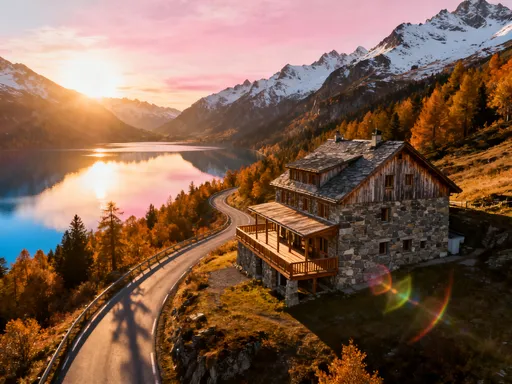
As roads ascend from the lake into higher elevations, architectural styles shift to meet the demands of alpine conditions. In areas like Above the Bay and the hills above Arrowtown, buildings are constructed to withstand heavy snowfall, freezing temperatures, and strong winds. The dominant materials—schist stone, dark-stained timber, and corrugated metal—mirror the colors and textures of the surrounding cliffs and forests. Steeply pitched roofs prevent snow accumulation, while sheltered entryways and recessed windows reduce wind exposure. These design choices are not merely aesthetic; they are essential adaptations that ensure durability and comfort in a challenging climate.
Schist stone, quarried locally, is a hallmark of alpine architecture in Central Otago. Its layered appearance and cool gray tones blend naturally with the rocky terrain, making buildings appear as if they have emerged from the earth itself. Many homes incorporate stone foundations or full stone walls, providing thermal mass that helps regulate indoor temperatures. In winter, these walls absorb heat during the day and release it slowly at night, reducing reliance on artificial heating. Timber framing, often using sustainably sourced pine or larch, adds warmth and structural flexibility. The combination of stone and wood creates a balance between solidity and livability, grounding the home in its environment while maintaining human comfort.
Architectural layouts in these zones also reflect functional priorities. Open-plan living areas are common, promoting warmth and social connection, while bedrooms are often positioned on the leeward side of the house to minimize exposure. Triple-glazed windows and high-performance insulation are standard, ensuring energy efficiency without sacrificing views. Some homes feature south-facing sunrooms or solariums to capture low winter sunlight, further enhancing passive heating strategies. These innovations demonstrate how modern design can respond intelligently to environmental challenges, creating spaces that are both resilient and inviting.
Even recreational structures like ski lodges and mountain huts follow these principles. Built for temporary use, they are designed to be low-maintenance and weather-resistant, often using prefabricated components for ease of assembly. Their compact footprints reduce ecological impact, and many are equipped with rainwater harvesting systems and composting toilets. These features reflect a broader commitment to sustainability in alpine development, where every decision must consider the fragility of the ecosystem. For travelers, encountering these buildings adds depth to the journey—each one a quiet lesson in resilience and harmony.
Modern Retreats and Sustainable Design
Scattered across secluded valleys and forested ridges are contemporary homes that represent the cutting edge of sustainable architecture. These modern retreats embrace eco-conscious principles without compromising on design or comfort. Solar panels, green roofs, and rainwater collection systems are now common features, reflecting a growing commitment to environmental responsibility. Architects are increasingly prioritizing passive solar design, where building orientation, window placement, and thermal mass work together to maintain stable indoor temperatures year-round. The result is a new generation of homes that are not only beautiful but also energy-efficient and low-impact.
Minimalism defines much of this architectural movement. Clean lines, geometric forms, and a restrained color palette create spaces that feel calm and intentional. Exteriors often feature flat or slightly sloped roofs, large overhangs, and floor-to-ceiling glass, all designed to maximize light and connection with the outdoors. Inside, open layouts and multi-functional furniture enhance flexibility, while natural materials like concrete, timber, and stone provide texture and warmth. The absence of clutter is not just aesthetic—it reflects a lifestyle centered on simplicity, mindfulness, and respect for nature.
One of the most innovative aspects of these retreats is their integration with native vegetation. Rather than clearing land, architects often design around existing trees and rock formations, allowing the landscape to shape the building. Green roofs, planted with local grasses and wildflowers, help insulate homes while restoring habitat for insects and birds. Permeable paving, native landscaping, and wildlife corridors further reduce ecological disruption. These homes are not just placed on the land—they are woven into it, becoming part of the ecosystem rather than separate from it.
For environmentally conscious travelers, staying in or visiting such a retreat can be deeply inspiring. It demonstrates that luxury and sustainability are not mutually exclusive. A home can be both striking in design and gentle on the planet. It can offer panoramic views without exploiting the environment. It can provide comfort without excessive energy use. These principles are increasingly influencing mainstream architecture in Queenstown, encouraging developers and homeowners to think beyond aesthetics and consider long-term ecological impact. The rise of sustainable retreats signals a shift in values—one that prioritizes stewardship, resilience, and harmony with nature.
Village Charms: Arrowtown and Beyond
Just a 25-minute drive from Queenstown, the village of Arrowtown offers a striking contrast in architectural scale and character. Nestled in a narrow valley along the Arrow River, this former gold-mining town retains much of its 19th-century charm. Its streets are lined with low-slung cottages featuring corrugated iron roofs, timber cladding, and flower-filled gardens. Many of these homes were built by Chinese miners during the gold rush era and have been carefully preserved. Walking through Arrowtown feels like stepping into a living museum, where history is not behind glass but part of daily life.
The human-scale architecture of Arrowtown creates an intimate, welcoming atmosphere. Unlike the more commercialized center of Queenstown, this village emphasizes coziness and community. Shops and cafes occupy restored cottages, their facades unchanged for decades. The old Chinese Settlement, located along Buckingham Street, includes remnants of stone huts and cooking pits, offering a poignant glimpse into the lives of immigrant workers. Interpretive signs provide historical context, helping visitors understand the social and cultural layers embedded in the built environment. These stories enrich the architectural experience, turning simple buildings into vessels of memory and meaning.
Arrowtown also exemplifies successful heritage preservation. The Central Otago District Council has implemented strict guidelines to protect the town’s character, limiting new construction and regulating building materials. As a result, modern additions blend seamlessly with historic structures, maintaining visual continuity. This careful stewardship ensures that Arrowtown remains authentic rather than becoming a themed tourist attraction. For drivers exploring the region, a stop in Arrowtown provides a perfect balance—offering history, charm, and a slower pace without straying far from Queenstown’s amenities.
Walking tours enhance the experience, allowing visitors to explore hidden lanes, discover preserved interiors, and engage with local artisans. Many homes open their gardens during seasonal events, showcasing native plants and traditional landscaping techniques. These moments of connection—between people, places, and histories—deepen the travel experience. Arrowtown reminds us that architecture is not just about form and function but about continuity and belonging. It shows how a community can honor its past while thriving in the present.
Why Architecture Enhances the Travel Experience
Noticing architecture transforms a simple road trip into a journey of discovery. Buildings are more than shelters—they are cultural artifacts that reveal how people adapt to climate, express identity, and interact with their environment. In Queenstown, every structure tells a story: of gold rush ingenuity, alpine resilience, environmental awareness, and aesthetic evolution. By paying attention to design details—the texture of schist stone, the slope of a roof, the placement of a window—travelers gain a deeper understanding of place. This awareness fosters connection, turning sightseeing into meaningful engagement.
Architecture also serves as a bridge between past and present. Historic cottages, modern eco-homes, and alpine lodges coexist in this region, each representing a different era of thought and technology. Together, they illustrate a continuous dialogue between humans and nature—one that values beauty, function, and sustainability. For travelers, especially those seeking enriching experiences, this layered narrative adds depth and resonance. It encourages mindfulness, prompting questions about how we build, live, and belong.
Self-driving through Queenstown offers the perfect pace for such reflection. Without the constraints of a fixed itinerary, travelers can pause, observe, and absorb. They can return to a favorite spot at different times of day, noticing how light transforms a façade or how shadows define a courtyard. This slow, intentional travel aligns with the values embodied in the region’s architecture—respect, harmony, and presence. It invites a shift from consumption to appreciation, from movement to meaning.
Ultimately, the architectural journey through Queenstown is not just about seeing beautiful buildings. It is about understanding how design shapes experience, how environment influences form, and how communities express themselves through the spaces they create. For the thoughtful traveler, this awareness enhances every moment of the trip. It turns a scenic drive into a story—one written in stone, timber, and glass, unfolding along winding roads and quiet lanes. By choosing to look closely, we don’t just visit a place. We come to know it.