Lost in the Charm of Galle: Where Every Corner Tells a Story
Stepping into Galle, Sri Lanka feels like entering a living postcard. The sea whispers against ancient walls, while cobblestone streets lead to hidden courtyards and breezy seaside cafés. I came for the scenery, but stayed for the soul of the place. This isn’t just a destination—it’s a mood, a rhythm, a blend of history and coastal beauty that grabs you softly and doesn’t let go. Galle doesn’t dazzle with grand gestures; instead, it reveals itself slowly, in the curve of a weathered stone stair, the laughter spilling from a garden tea house, or the golden light that bathes the ramparts at sunset. For travelers seeking beauty rooted in authenticity, Galle offers a rare experience: a place where every corner tells a story, and every moment feels quietly unforgettable.
Arrival in Galle: First Impressions That Stick
The journey to Galle sets the tone for what’s to come. Whether arriving by train along Sri Lanka’s southern coast or by car from Colombo or nearby Unawatuna, the approach is a slow unveiling. The Indian Ocean glimmers beside the tracks, waves curling in turquoise ribbons against rocky shores. Red-tiled roofs emerge above lush green walls, and the distant outline of Galle Fort rises like a sentinel from the peninsula. There’s a shift in the air—cooler, salt-kissed, carrying the faint scent of frangipani and damp stone—as you draw closer. This is not a city built for haste; it invites you to decelerate, to observe, to breathe.
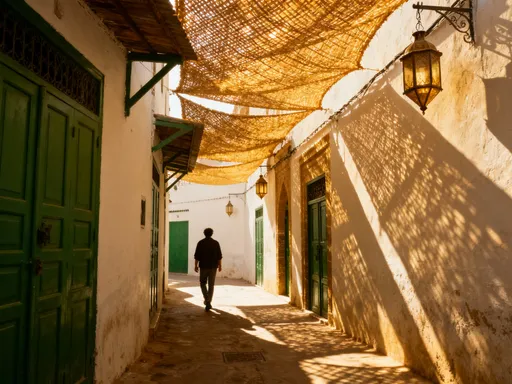
Upon arrival, the contrast between the modern town and the preserved heart of Galle Fort is striking. Outside the fort walls, bustling streets are lined with shops, tuk-tuks, and local vendors selling fresh jackfruit and banana fritters. But step through one of the ancient gates—such as the Sun Gate or the Sea Gate—and time seems to soften. The pace slows. The noise recedes. You’re walking on cobblestones worn smooth by centuries, flanked by colonial-era buildings with shuttered windows and flowering bougainvillea spilling over courtyards. This transition is part of Galle’s magic: it doesn’t erase the present, but layers it gently over the past.
For first-time visitors, orientation is simple but meaningful. The fort is compact—less than a square kilometer—making it ideal for exploration on foot. The best time to arrive is late afternoon, when the heat of the day begins to fade and the golden light enhances the textures of coral stone and lime-washed walls. Travelers arriving by train can walk directly to the fort in about 15 minutes, passing through the vibrant local neighborhoods that offer a glimpse into everyday life. Those arriving by car or tuk-tuk can enter through one of the main gates, with parking available just outside the walls.
Initial tips for a smooth arrival include wearing comfortable walking shoes—uneven surfaces and occasional steps demand support—and carrying a reusable water bottle, as the coastal humidity can be deceptively draining. A small map or offline GPS is helpful, though the fort’s layout is intuitive, with most paths leading either toward the lighthouse, the clock tower, or the eastern ramparts. Most importantly, resist the urge to rush. The true essence of Galle reveals itself not in checklists, but in lingering glances—at a cat curled in a sunlit doorway, at the way shadows stretch across a courtyard at dusk, at the soft chime of a distant church bell.
Galle Fort: More Than Just Walls
The heart of Galle is its 17th-century Fort, a UNESCO World Heritage site that stands as a testament to centuries of maritime history. Originally built by the Portuguese in the 16th century and later expanded by the Dutch, the fort’s thick coral walls were designed to withstand both ocean storms and military sieges. Today, they enclose a living neighborhood where history is not preserved behind glass, but woven into daily life. This is not a museum frozen in time, but a dynamic community where boutique hotels, art galleries, and family homes coexist within the same weathered walls that once guarded a colonial stronghold.
Walking through the fort is an exercise in discovery. The layout follows a grid pattern, with narrow lanes branching off from the central square near the clock tower. Each turn offers a new vignette: a colonial-era mansion converted into a tea shop, a hand-painted sign for a local tailor, a hidden garden courtyard where jasmine climbs a crumbling archway. The architecture is a blend of Dutch, British, and Sri Lankan influences—tall windows with louvered shutters, thick walls for insulation, and roofs designed to channel monsoon rains. Many buildings have been thoughtfully restored, their facades retaining original features while housing modern comforts.
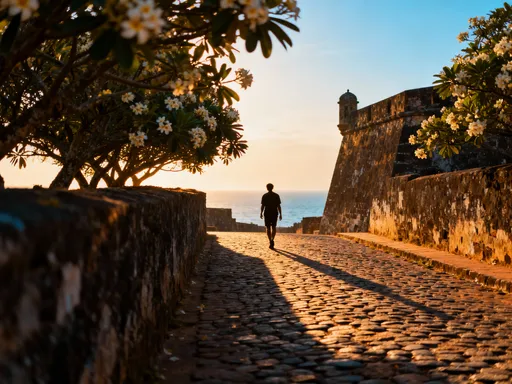
One of the most rewarding experiences is walking the ramparts at sunset. The eastern and southern walls offer uninterrupted views of the Indian Ocean, where waves crash dramatically against the stone base. As the sun dips below the horizon, the sky shifts through shades of amber, rose, and deep violet, casting long shadows across the fort. The lighthouse, perched at the southern tip, begins to glow, a quiet sentinel marking the edge of land and sea. This is a popular moment for photography, but it’s also a deeply personal experience—a chance to pause and absorb the quiet grandeur of a place shaped by time and tide.
For those interested in history, the National Maritime Museum, housed in a former Dutch warehouse, offers a rich introduction to Galle’s role in Indian Ocean trade. Exhibits include navigational instruments, ship models, and artifacts from shipwrecks, illustrating how Galle became a crucial stopover for traders from Europe, the Middle East, and Asia. The museum is compact but informative, ideal for a mid-morning visit when the fort is still relatively quiet. Other notable sites include the Dutch Reformed Church, with its elegant arched ceiling and historic tombstones, and the Old Gate, one of the original entrances to the fort, inscribed with the VOC monogram of the Dutch East India Company.
Practical considerations enhance the experience. Walking the full perimeter of the fort takes about 45 minutes at a leisurely pace, but most visitors prefer to explore in shorter segments, allowing time to pause at cafés or shops. Comfortable footwear is essential—while the main paths are paved, some side alleys are uneven or slippery when wet. The midday sun can be intense, so early mornings or late afternoons are ideal for outdoor exploration. Sun hats, light clothing, and a small umbrella for sudden showers are recommended, especially during the inter-monsoon months.
Beyond the Fort: Scenic Gems Most Tourists Miss
While Galle Fort commands much of the attention, some of the most memorable experiences lie just beyond its walls. A short walk or tuk-tuk ride leads to quieter corners of the coastline, where nature and legend intertwine. Among these, Rumassala Hill and Jungle Beach stand out as hidden treasures that offer respite from the more frequented paths. These spots are not always highlighted in guidebooks, but they provide a deeper connection to Galle’s natural and cultural landscape.
Jungle Beach, accessible by foot via a narrow trail from the southern ramparts or by boat from Unawatuna, is a small, crescent-shaped cove surrounded by rocky outcrops. The water here is often calm, making it suitable for swimming when conditions are favorable. However, currents can be unpredictable, so visitors are advised to check with locals before entering the water. The beach itself is unspoiled, with soft sand and minimal development—no vendors, no loud music, just the sound of waves and seabirds. It’s an ideal spot for a quiet swim, a picnic under the shade of a palm, or simply lying back and watching the clouds drift across the sky.
Equally rewarding is Rumassala Hill, a forested peak just south of the fort. According to local legend, this hill was formed when Hanuman, the monkey god of the Ramayana, dropped a piece of the Himalayas here while searching for a healing herb. Today, it’s a sanctuary of greenery, with well-marked trails leading through tropical foliage to panoramic viewpoints. The hike is short—about 30 to 45 minutes round trip—but steep in parts, so sturdy footwear is recommended. At the summit, the reward is a sweeping vista of Galle Fort, the coastline stretching north and south, and the Indian Ocean stretching to the horizon. It’s a place of stillness, where the only sounds are rustling leaves and distant waves.
Visiting these sites responsibly is essential. Both Jungle Beach and Rumassala are ecologically sensitive areas. Travelers are encouraged to carry out all waste, avoid loud noises, and refrain from disturbing wildlife. Jungle Beach, in particular, is home to small crabs and nesting birds, and plastic pollution is a growing concern. By practicing low-impact tourism—such as bringing reusable containers and avoiding single-use plastics—visitors help preserve the natural beauty that makes these places special. Moreover, engaging respectfully with local communities, whether by hiring a boat from a resident fisherman or buying water from a nearby stall, supports sustainable tourism in the region.
The Coastal Pulse: Watching the Indian Ocean Work Its Magic
The sea is not just a backdrop in Galle—it is a presence, a force, a constant companion. The Indian Ocean shapes the rhythm of life here, from the fishermen who launch their boats at dawn to the children who splash in the shallows at low tide. Its moods shift with the hours: calm and glassy in the early morning, restless and thunderous during high tide, and gently lapping during the evening lull. To understand Galle, one must spend time by the water, observing how it interacts with the land and the people.
One of the most powerful experiences is walking along the eastern ramparts in the morning. As the sun rises, the waves crash against the fort’s base with rhythmic intensity, sending sprays of white foam into the air. The sound is both soothing and invigorating, a natural symphony that drowns out the distractions of daily life. Locals often gather here at sunrise, some sipping tea, others doing light exercises or simply standing in quiet contemplation. It’s a moment of shared stillness, a reminder that beauty doesn’t always require grandeur—sometimes, it’s found in the repetition of waves, the pattern of light on water, the coolness of the sea breeze on your skin.
For a more tranquil seaside experience, Secret Beach offers a softer contrast. Tucked between rocky headlands just north of the fort, this small inlet features fine golden sand and calm waters during low tide. It’s less crowded than other beaches, making it ideal for families or travelers seeking solitude. The best time to visit is late afternoon, when the sun is lower and the light casts a warm glow across the shore. Children can safely wade in the shallows, while adults relax under umbrellas or stroll along the water’s edge. Unlike commercialized beaches, Secret Beach has no loud music or vendors, preserving its peaceful character.
Tide awareness enhances the coastal experience. High tide transforms rocky shores into dramatic wave-watching spots, while low tide reveals tidal pools, sandbars, and safe swimming areas. Travelers can use tide-checking apps or consult local guides to plan visits accordingly. Sun protection is crucial—hats, reef-safe sunscreen, and lightweight cover-ups help prevent sunburn, especially during midday. For those who prefer to observe from a distance, seaside cafés along Pedlar Street or near the lighthouse offer shaded terraces with uninterrupted ocean views, perfect for a cup of Ceylon tea or a plate of fresh papaya.
Green Spaces and Local Life: A Different Kind of Beauty
Scenic beauty in Galle extends beyond the coastline and colonial architecture. Some of the most touching moments come from quieter, everyday scenes: a courtyard blooming with hibiscus, a street vendor arranging coconuts, a grandmother fanning herself on a porch. These glimpses into local life add depth to the travel experience, transforming sightseeing into meaningful connection.
The Public Gardens, located near the clock tower, are a peaceful retreat within the fort. Laid out in the British colonial era, the gardens feature manicured lawns, shaded pathways, and a small pond with lilies. It’s a favorite spot for families, couples, and elderly residents who come to walk, read, or simply sit on a bench and watch the world pass by. The atmosphere is one of gentle ease, a contrast to the more structured beauty of historical sites. Morning is the best time to visit, when the air is cool and the garden is filled with the scent of damp earth and blossoms.
Another hidden gem is the courtyard of Amangalla, a luxury hotel housed in a former Dutch governor’s residence. While the hotel itself is exclusive, its courtyard is often open to the public during the day, offering a glimpse of refined colonial elegance. Stone arches, potted palms, and a central fountain create a sense of timeless serenity. Even if you’re not staying overnight, a brief visit provides a moment of quiet reflection, a chance to imagine life in a bygone era.
Exploring residential lanes outside the main tourist paths reveals more intimate scenes. Side streets in areas like Church Street or Sea View Lane are lined with homes adorned with flower pots, prayer flags, and hand-painted signs. Morning markets buzz with activity—women selecting fresh vegetables, men arranging baskets of mangoes and pineapples, children carrying school bags. A stop at a roadside stall for king coconut water—a sweet, refreshing drink served in the shell—offers not just hydration but a moment of connection. These interactions, brief as they may be, remind travelers that Galle is not a performance for visitors, but a lived reality for its residents.
Planning Your Days: A Balanced Itinerary for Scenery Lovers
To fully appreciate Galle’s layered beauty, a thoughtful itinerary is key. Rushing through the fort or cramming too many activities into one day can dilute the experience. Instead, a slower, more intentional pace allows the senses to absorb the details—the texture of old stone, the sound of distant waves, the warmth of a sunlit wall. A well-balanced two-day plan offers depth without fatigue.
Day One can focus on the fort and its immediate surroundings. Begin early, around 7:00 a.m., with a walk along the eastern ramparts to witness the sunrise and enjoy the cool morning air. Afterward, explore the fort’s interior—visit the Maritime Museum, stroll through the Public Gardens, and stop for breakfast at a local café. Mid-morning is ideal for visiting boutiques and art galleries, many of which open around 9:00 a.m. Lunch can be enjoyed at a seaside restaurant, followed by a brief rest during the hottest hours. Late afternoon offers another opportunity to walk the ramparts or visit the lighthouse as the light turns golden. Dinner at a family-run eatery completes the day.
Day Two ventures beyond the fort. Start with a hike up Rumassala Hill, ideally before 8:00 a.m. to avoid the midday heat. After returning, a visit to Jungle Beach or Secret Beach provides a refreshing contrast. A boat ride from Unawatuna to Jungle Beach offers scenic views and a chance to support local fishermen. Lunch can be a simple picnic or a meal at a beachside shack. The afternoon can be spent exploring residential lanes or visiting a local market. Ending the day with tea at a fort café, watching the evening light fade, brings a sense of closure.
Transportation between sites is straightforward. The fort is best explored on foot, while tuk-tuks are reliable for longer distances. Most drivers are familiar with key destinations and can be hired for half-day or full-day trips. Walking from the fort to Jungle Beach takes about 20 minutes, though the path can be uneven. Comfortable shoes, water, and a small backpack with essentials make exploration easier. The goal is not to see everything, but to experience deeply—to let Galle’s quiet magic unfold at its own pace.
Why Galle Stays With You: Beauty That Feels Real
What makes Galle unforgettable is not just its scenery, but its authenticity. Unlike resorts designed for visual perfection, Galle embraces imperfection—the crack in a centuries-old wall, the stray cat napping in a sunbeam, the fisherman mending his net just outside the fort gates. These details don’t detract from the beauty; they enhance it. They remind us that the most meaningful places are not staged, but lived in, shaped by time, weather, and human presence.
This authenticity creates lasting memories. Years later, you may not recall every building or landmark, but you’ll remember the feeling—the warmth of the stone beneath your hand, the taste of fresh coconut, the sound of waves at dusk. You’ll remember the kindness of a shopkeeper who offered directions, the laughter of children playing in a courtyard, the quiet moment when you stood alone on the ramparts, watching the ocean stretch endlessly toward the horizon. These are the moments that stay with you, not because they were perfect, but because they were real.
Traveling mindfully enhances this experience. By moving slowly, observing deeply, and respecting the local culture and environment, visitors become part of Galle’s story rather than just passing through it. Leaving no trace—whether by avoiding plastic, keeping noise levels low, or supporting local businesses—ensures that future travelers will also have the chance to discover its quiet magic. In a world that often feels rushed and artificial, Galle offers a rare gift: a place where beauty is not manufactured, but earned through time, tide, and tradition. Let it unfold. Let it linger. And let it remind you that the best journeys are not just seen, but felt.