You Won’t Believe How Stunning Rabat’s Hidden Culture Is
Rabat, Morocco, isn’t just the capital—it’s a quietly breathtaking blend of history, art, and everyday charm that feels untouched by time. I wandered through sun-drenched medinas, stumbled upon coastal views that looked photoshopped, and connected with locals who shared stories I’ll never forget. This city doesn’t shout for attention, but once you’re there, you can’t look away. If you’re chasing real cultural moments with serious Instagram appeal, Rabat needs to be next on your list.
The First Glimpse: Arriving in Rabat with No Expectations
Stepping off the train or pulling up to Rabat by car, there’s an immediate sense of calm that distinguishes it from Morocco’s more frenetic cities. Unlike the sensory overload of Marrakech or the urban energy of Casablanca, Rabat greets visitors with wide, tree-lined avenues, orderly neighborhoods, and a refreshing lack of chaos. The city unfolds gently, like a well-kept secret. This isn’t a place that clamors for attention—it simply exists, dignified and deliberate, as though confident in its own significance.
What strikes first is the architectural harmony. French colonial buildings with shuttered windows and wrought-iron balconies stand shoulder to shoulder with traditional Moroccan riads and grand Islamic monuments. The blend feels neither forced nor dated; instead, it tells the story of a city shaped by multiple influences yet rooted in its own identity. Rabat has been Morocco’s capital since 1912, but its history stretches back centuries, and every layer remains visible, respected, and beautifully preserved.
One of the most powerful first impressions awaits at the heart of the city: the Hassan Tower and the Mausoleum of Mohammed V. The minaret, begun in the 12th century by the Almohad caliph Yaqub al-Mansur, rises with quiet majesty—its red sandstone structure standing incomplete, yet profoundly moving. Beside it, the Mausoleum of Mohammed V, completed in the 1970s, is a masterpiece of modern Moroccan craftsmanship. The white marble, intricate zellij tilework, and delicate cedar carvings honor the late king and his two sons with elegance and reverence. Visitors often pause here not just to admire the beauty, but to feel the weight of history and national pride that radiates from the site.
There’s a spiritual stillness in this complex, a sense of continuity between past and present. It sets the tone for the entire journey through Rabat—one of quiet respect, understated grandeur, and cultural depth. For many travelers, especially women in their 30s to 50s seeking meaningful, enriching experiences, this moment of arrival becomes a kind of reset. The pace slows. The mind quiets. And the heart opens to what’s next.
Walking Through Time: Exploring the Medina and Old City Walls
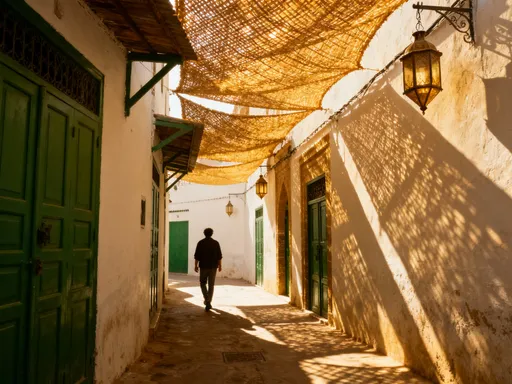
The medina of Rabat offers a rare gift: authenticity without overwhelm. While the medinas of Fes and Marrakech are legendary, they can also feel crowded, commercialized, or difficult to navigate for those seeking a more personal experience. Rabat’s old city, by contrast, unfolds at a gentler rhythm. Its narrow alleys, arched passageways, and honey-colored walls invite exploration without intimidation. This is a living neighborhood, not a museum piece, where artisans work, families gather, and daily life unfolds in full color.
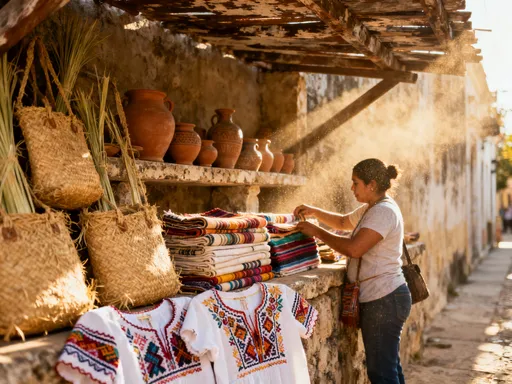
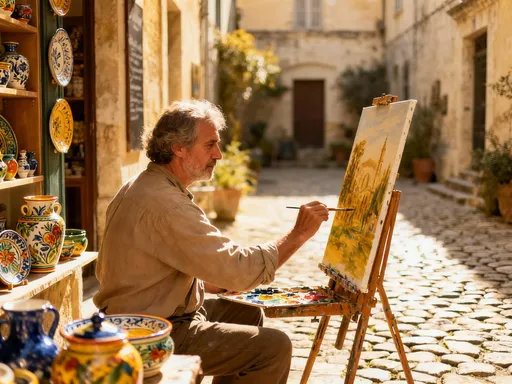
As you wander deeper into the medina, the air fills with the scent of leather, saffron, and freshly baked bread. Artisans sit in small workshops, their hands moving with practiced precision—stitching babouches (Moroccan slippers), hammering silver into delicate jewelry, or shaping clay into glazed pottery. In one corner, a man bends over a wooden frame, weaving traditional rugs with patterns passed down through generations. These aren’t performances for tourists; they’re real livelihoods, sustained by skill and tradition.
One of the most memorable moments comes from getting slightly lost. Without the pressure of a rigid itinerary, you’re free to follow a narrow lane that opens unexpectedly into a sunlit courtyard. There, tucked behind a green door, you might find a quiet café where mint tea steams in ornate glasses and elderly men sip quietly over newspapers. The walls are painted in soft ochre and blue, and bougainvillea spills over the edges of terraces. It’s the kind of place that feels like a secret, discovered only by those who wander with curiosity and patience.
Every turn reveals textures worth photographing—the peeling paint on an old door, the geometric shadows cast by latticework, the vibrant hues of stacked spices in a corner market. But more than the visuals, it’s the human connections that linger. A shopkeeper offers you a taste of almond-stuffed dates with a warm smile. A young girl in a school uniform waves as she passes on her way home. These small interactions, unscripted and genuine, form the soul of the medina. For the thoughtful traveler, especially one seeking beauty with meaning, Rabat’s old city delivers both in abundance.
Chasing Light: The Most Instagram-Worthy Spots You Can’t Miss
Rabat is a city that rewards the observant eye. While it doesn’t market itself as a visual spectacle, those who pay attention are treated to moments of pure aesthetic magic. The play of light, color, and architecture creates scenes so vivid they seem almost unreal—yet every one is real, unfiltered, and waiting to be discovered.
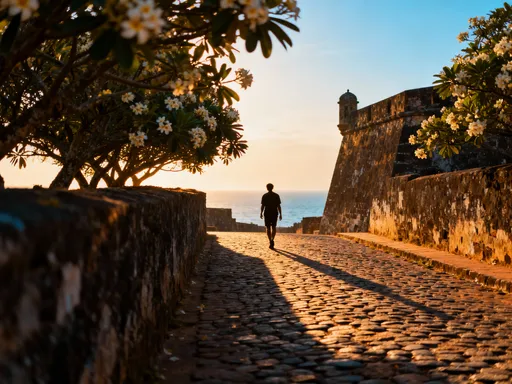
One of the most iconic vantage points is the Kasbah of the Udayas, a fortress perched on a cliff where the Bou Regreg River meets the Atlantic Ocean. Walking through its blue-painted gate feels like stepping into another world. The streets inside are narrow and immaculate, lined with whitewashed houses trimmed in bright green. Potted geraniums bloom in every direction, and the ocean breeze carries the scent of salt and jasmine. At sunset, the entire neighborhood glows in golden light, casting long shadows and turning the cobblestones into a canvas of warm tones. It’s no surprise this spot has become a favorite among photographers and social media travelers alike.
Another must-see is the Andalusian Garden, located just inside the kasbah. Designed in the early 20th century by French architect Henri Prost, it blends formal European landscaping with traditional Islamic elements—symmetrical pathways, fountains, and shaded pergolas covered in climbing roses. At golden hour, the sunlight filters through the trees, creating dappled patterns on the ground. The sound of water trickling from stone basins adds to the serenity. It’s a place designed for reflection, and many visitors sit quietly on the benches, absorbing the peace.
Then there’s the now-famous blue door—a simple wooden entrance painted in a striking cobalt hue, tucked into a quiet alley near the kasbah. It wasn’t built for fame, but its vivid color against the muted stone walls caught the eye of travelers, and soon it became a quiet social media phenomenon. What makes it special isn’t just its beauty, but what it represents: the idea that magic can be found in the ordinary, if you’re willing to look. Unlike more overtly touristy spots, there’s no pressure here. You can take your photo, smile, and move on—no crowds, no vendors, just a moment of pure visual delight.
These spots are more than just backdrops for photos. They are expressions of Rabat’s character—refined, layered, and deeply rooted in both history and daily life. For women who value beauty with substance, these places offer not just Instagram moments, but lasting memories of a city that reveals itself slowly, gracefully.
Beyond the Surface: Connecting with Local Life and Traditions
The true richness of Rabat lies not in its monuments or photo ops, but in its people and their quiet dedication to tradition. This is a city where culture isn’t performed—it’s lived. One of the most touching ways to experience this is through the simple ritual of tea. In Morocco, serving mint tea is an act of hospitality, and in Rabat, it’s offered freely and warmly, often without expectation of return.
I remember sitting in a small leather shop in the medina, drawn in by the scent of cured hides and polished wood. The owner, a man in his 60s with kind eyes and calloused hands, invited me to sit on a low cushion. Without a word, he began preparing tea—boiling water, tearing fresh mint leaves, adding green tea and sugar. As he poured from a height to create foam, he shared fragments of his life: how he learned the craft from his father, how he hopes his son will continue it, how he loves Rabat for its calm. The conversation was simple, but the connection was real.
Elsewhere, in a quiet courtyard school near the old walls, I watched a master calligrapher teach young students the art of Arabic script. Using reed pens and handmade ink, they practiced the flowing curves of the language with patience and reverence. Calligraphy is not just writing here—it’s a spiritual practice, a bridge between the divine and the human. The teacher explained that each letter carries meaning beyond sound, and that beauty in writing reflects beauty in character. It was a lesson in mindfulness, discipline, and cultural pride.
At the local market, known as a souk, the rhythm of daily life unfolds in full view. Women in colorful djellabas select fresh herbs, olives, and flatbreads. Butchers hang lamb and chicken in shaded stalls, while fruit vendors arrange pyramids of oranges, pomegranates, and figs. There’s no rush, no pressure to buy—just the steady hum of community. I joined a group of women waiting for freshly baked khobz (round Moroccan bread), and we chatted about recipes, family, and the changing seasons. These moments, small and unremarkable on the surface, are the heartbeat of Rabat.
What stands out is the absence of performance. There’s no need to impress, no script to follow. People go about their lives with a quiet dignity, proud of their heritage but not eager to sell it. For women who travel to understand, to grow, and to connect, these experiences are priceless. They remind us that the most meaningful journeys are not about ticking off landmarks, but about opening our hearts to the lives of others.
Coastal Magic: When History Meets the Atlantic
Rabat’s geography is one of its greatest gifts. Unlike inland cities, it enjoys a unique relationship with the sea. The Bou Regreg River flows into the Atlantic Ocean just south of the city center, creating a landscape where history, nature, and daily life converge. This isn’t just a scenic backdrop—it’s an integral part of Rabat’s identity.
A walk along the waterfront near the Hassan Tower offers one of the most powerful views in the city. From this vantage, you can see the minaret rising beside the vast expanse of the river, with the old fort of Salé on the opposite bank. The water reflects the sky in shifting shades of blue and gray, and seabirds glide overhead. It’s a place of quiet contemplation, where the weight of centuries feels present in the air.
Further south, along the coastline, lies Plage des Pêcheurs—a modest stretch of sand where local fishermen still bring in their daily catch. Unlike the commercial beaches of Agadir or Tangier, this one remains largely untouched by tourism. On weekends, families gather to picnic, children fly kites, and teenagers practice surfing on gentle waves. The sight of young Moroccans riding the Atlantic swells, their boards painted with bold colors, is both inspiring and symbolic—a new generation embracing both tradition and modernity.
Nearby, the ruins of Chellah stand as a testament to Rabat’s layered past. Once a Roman settlement, then a medieval Islamic necropolis, the site is now a tranquil garden filled with storks nesting in ancient columns and wildflowers growing between stone arches. At dawn or dusk, the light filters through the broken walls, casting long shadows and creating an almost dreamlike atmosphere. It’s a place where time feels suspended, where the past isn’t buried but simply resting.
This blend of natural beauty and historical depth gives Rabat a mood unlike any other Moroccan city. It’s neither too loud nor too quiet, neither too modern nor too old. It exists in balance—a city that honors its roots while moving forward with grace. For travelers seeking a destination that feels both grounding and inspiring, this coastal harmony is unforgettable.
Eating Like a Local: Flavors That Tell a Story
In Rabat, food is not just sustenance—it’s a language. Every dish carries history, family, and place. Unlike tourist-heavy cities where menus are translated and flavors adjusted, Rabat’s eateries serve food as it’s meant to be: honest, flavorful, and deeply connected to the land.
One of the most memorable meals I had was at a small, family-run restaurant tucked behind the medina walls. There was no sign, no website, just a few plastic tables and a woman in a floral apron stirring a pot over a gas flame. She served me rfissa—a traditional dish made with lentils, chicken, and msemen (flaky Moroccan pancakes), seasoned with fenugreek and saffron. It’s often prepared for celebrations, especially after the birth of a child, and eating it felt like being welcomed into a family tradition. The flavors were subtle but layered—earthy, aromatic, comforting. I ate slowly, savoring each bite, while the owner smiled and refilled my tea without a word.
Street food in Rabat is equally rewarding. At a simple stall near the train station, I watched a man press fresh orange juice from mountain-grown fruit, the pulp dripping into a tall glass over ice. The sweetness was natural, the color vibrant. Nearby, a woman grilled msemen on a hot plate, folding the dough with practiced hands and serving it with honey or cheese. There was no pressure to tip, no expectation of a review—just good food, fairly priced, made with care.
Dining in Rabat feels genuine because it’s not designed for outsiders. Menus aren’t translated to impress; prices aren’t inflated to profit. You eat where locals eat, and in doing so, you participate in their daily rhythm. For women who value authenticity in travel, this kind of experience is rare and precious. It’s not about luxury or spectacle, but about connection—through shared meals, shared spaces, and shared moments.
The absence of performance extends to the dining etiquette as well. There’s no rush to finish, no need to perform enjoyment. You’re free to sit, observe, and simply be. In a world where travel often feels curated and fast, Rabat offers a different pace—one that allows for presence, reflection, and gratitude.
Why Rabat Stays With You: The Quiet Power of Authentic Travel
What makes Rabat unforgettable isn’t its monuments, though they are beautiful. It’s not its photo spots, though they are stunning. What lingers is the feeling of having touched something real—a city that doesn’t need to shout to be heard, that doesn’t need to dazzle to be loved.
In an age of overexposure, where every destination is ranked, rated, and filtered, Rabat stands apart. It hasn’t been worn down by mass tourism. It hasn’t been reshaped to fit trends. It remains, quietly and confidently, itself. For women who travel not just to see, but to feel and understand, this is a rare gift.
Compared to more popular Moroccan cities, Rabat offers a different kind of richness—one built on calm, authenticity, and human connection. It’s a place where you can walk without being approached, sit without being sold to, and listen without distraction. The pace allows for deeper observation, for real conversations, for moments of quiet joy.
And yet, Rabat is not untouched by the modern world. Social media has begun to highlight its beauty, and more travelers are discovering its charms. But there’s hope that this attention can be respectful—that visitors will come not to consume, but to connect. The city’s quiet dignity invites a slower, more thoughtful kind of tourism, one that values preservation over profit, and connection over clicks.
In the end, Rabat reminds us why we travel. It’s not just to collect photos or check destinations off a list. It’s to be reminded of the beauty of ordinary life, the strength of tradition, and the power of human kindness. It’s to return home with a fuller heart, a clearer mind, and a deeper appreciation for the quiet wonders of the world.
So if you’re ready to step off the beaten path, to seek not just beauty but meaning, let Rabat be your next destination. Let its sunlit alleys, its ocean breezes, its shared cups of tea, and its unhurried rhythm remind you that the most powerful journeys are often the quietest ones.